
A Natural Daily Rhythm for Human Health
(Inspired by the lifestyle protocols of Dr Khadar Valli)
Modern life rarely follows a natural rhythm.
We wake to alarms, eat while distracted, move little, and sleep under artificial light. Over time, this quiet misalignment accumulates — not as a dramatic event, but as subtle fatigue, restlessness, and digestive strain.
This page presents a simple daily rhythm informed by traditional lifestyle knowledge and lived observation.
- It is not a protocol to be completed.
- It is not a checklist to perfect.
- It is a reference — meant to be entered gently and revisited over time.
The practices here are layered. Most readers begin with one or two adjustments, allow them to settle, and return later for the next layer.
There is no need to implement everything at once.
In fact, doing so would miss the point.
Begin where it feels reasonable.
Let rhythm build gradually.
This guide is structured in natural sections, with pauses between them. Many readers explore it over days or weeks rather than in a single sitting.
Start with movement.
Everything else builds from there.
How to Use This Page
- Skim the headings to understand the overall structure.
- Read slowly — not all at once.
- Begin with one practice.
- Allow it to settle before adding another.
- Bookmark sections you wish to revisit.
This page is meant to be returned to, not finished.
Even one small change, practiced consistently, is enough to begin.
Intent of This Page
This page presents a simple daily rhythm for human health, informed by traditional lifestyle knowledge and inspired in part by the teachings of Dr. Khadar Valli.
It is not presented as a fixed protocol or universal prescription, but as a living reference — structured for clarity and meant to be adapted thoughtfully through personal experience.
The emphasis throughout is on rhythm, simplicity, and long-term compatibility rather than intensity, intervention, or quick results.
Table of Contents
Part I — Begin with Movement
Before adjusting diet or sleep timing, begin with movement.
Walking restores circulation, steadies breathing, and lowers internal pressure.
This is the simplest place to start.
Walking — The Primary Daily Movement
(The most natural and sustainable form of daily movement.)
Walking is the primary form of daily movement for the human body.
It requires no equipment, no training, and no performance mindset.
Walking is not approached here as “exercise,” but as rhythmic movement that supports circulation, digestion, and mental balance.
The body responds more to duration and regularity than to intensity.

Linked deep-dive articles
-
The Crucial 40–90 Minute Morning Walk: How to Get the Best Out of It for Health, Detox & Energy
-
Why Walking Is More Powerful Than Workouts
- Duration vs Intensity: Rethinking Movement
- Walking as Nervous System Regulation
- How Modern Life Reduced Natural Movement
One-line summary:
Walking sustains the body without demanding from it.
Already comfortable with these three practices?
Continue to Core Practices below ↓
Let’s Pause here
You’ve reached a natural stopping point.
There is no need to continue immediately.
If it feels natural, take one slow breath.
Take a moment to notice what feels clear — and what does not.
Return to Table of Contents Continue when ready
Bookmark or save this page here
Part II — Restore Rhythm
Modern life disturbs sleep more than it disturbs food.
Night rhythm shapes morning energy.
Here we adjust light, darkness, and waking gently.
Sleep in Total Darkness — Recovery Needs Quiet
(Sleep is not downtime. It is the body’s primary repair phase.)
Quality sleep depends less on duration alone and more on timing, darkness, and reduced stimulation.
Late nights, bright indoor lighting, and constant digital alerts fragment the body’s natural recovery processes. Even with 7–8 hours of sleep, poor conditions prevent deep restoration.
Rest is not passive. It is active repair.

Core guidelines
- Finish dinner early and keep it light
- Maintain a 90-minute gap between dinner and sleep
- Sleep in total darkness (no light sources visible)
- Keep the bedroom free of emitting devices (phones, tablets, screens)
- Wake naturally aligned with early morning light where possible
Summary
(Sleep follows rhythm.)
Good sleep is not something you “do” at 10:30 PM.
It is the result of:
• Early, lighter dinner
• Reduced light after sunset
• No screens in the final hour
• Gradual evening downshift
• Total darkness
• Consistent timing
• Morning light exposure
When these conditions are present, sleep becomes something the body naturally enters.
Linked deep-dive articles
-
Why Darkness Is Essential for Sleep
- Designing a Bedroom for Recovery
- Late Nights vs Early Nights: What the Body Prefers
- Screens, Sleep, and Mental Fatigue
One-line takeaway
Sleep begins long before you lie down — with darkness, timing, and a calm evening.
Wake Before Sunrise — Aligning with the Day
(The day begins before the sun appears.)
Waking before sunrise allows the body to transition gently from rest to activity. This period is naturally quieter, cooler, and less stimulating—making it easier to establish rhythm rather than reactivity for the day ahead.
The recommendation is simple:
- Wake at least 10–15 minutes before sunrise
- Begin the day without rushing or stimulation
This is about alignment, not discipline.

- Aim to wake before sunrise, not after
- Avoid alarms that shock the body when possible
- Keep mornings unhurried and quiet
- Allow natural light to enter through windows
- Let light, movement, and routine unfold gradually
This is about biological alignment, not willpower. Consistency in timing matters more than exactness.
Linked deep-dive articles
-
Why the Early Morning Feels Different
- Early Rising Without Fatigue
- How Night Habits Affect Morning Energy
Waking before sunrise gives the day room to unfold without urgency—but only if your evenings support it.
Let’s Pause here
You’ve reached a natural stopping point.
There is no need to continue immediately.
If it feels natural, take one slow breath.
Take a moment to notice what feels clear — and what does not.
Return to Table of Contents Continue when ready
Bookmark or save this page here
Part III — Align the Morning
The first hour of the day sets internal tone.
These practices are not tasks to complete — they are ways of entering the day calmly and deliberately.
Tooth & Mouth Care — The Gateway to Digestion
The mouth is the first point of contact between the body and food. How it is cared for affects digestion, oral health, and long-term inflammatory load.
In this approach, tooth and mouth care is kept simple, natural, and non-chemical, performed before any intake.
Cleanliness here is functional, not cosmetic.
Core Practices
- Brush using activated charcoal tooth powder
- Use fingers to massage gums while cleaning
- Twice a week, clean teeth using natural twigs (Neem / Peepal / Pongamia / Meswak)
- Perform oral care before food, kashaya, or drink

Linked deep-dive articles
- Why Oral Health Influences Digestion
-
Traditional Tooth-Cleaning Practices Explained
- Charcoal for Oral Care: Use Without Excess
What enters the body begins at the mouth — care here sets the tone for digestion.
Natural Elimination — Squatting Plays an important role
The human body is designed to evacuate waste in a squatting posture, not a seated one. Sitting toilets (Western-style commodes) are structurally misaligned with how the digestive system completes elimination.
If only a commode is available in your home, use a footstool to simulate squatting by elevating your feet 6–8 inches.
This is biomechanics, not cultural preference.
Why squatting is better than sitting
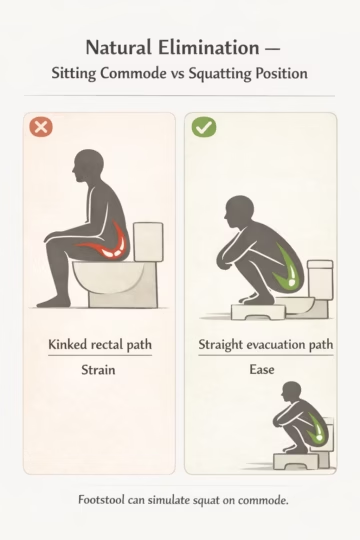
Malasana the highly recommended Yoga posture
Linked deep-dive articles
- Why the Human Body Is Designed to Squat for Elimination
- Indian Toilets vs Sitting Commodes: A Mechanical Comparison
- How Modern Toilets Changed Digestion
- Relearning Squatting Safely as an Adult
One-line summary:
Squatting posture aligns more closely with natural elimination mechanics —minimal effort, complete release.
Sun Exposure — Using Natural Light as a Biological Signal
Natural sunlight is one of the strongest signals the human body responds to.
Sunlight helps set daily biological rhythms by providing timing cues, not by heat or brightness.
In this approach, sun exposure is practiced briefly and gently, during specific windows of the day.
This is not sunbathing.
It is light awareness.
Core Practice
-
Observe the soft orange light of the sun
-
Practice during:
-
Early morning (sunrise)
-
Late evening (sunset)
-
-
Duration: 5–10 minutes
-
Exposure can be:
-
Direct viewing of the sky near the sun
-
Or indirect exposure on the face and eyes
-
❌ Avoid harsh midday sun
❌ Avoid staring at bright white sunlight

Linked deep-dive articles
- Why Light Timing Affects the Body
- Morning vs Evening Light: Different Signals
- Common Mistakes with Sun Exposure
Brief exposure to gentle sunlight helps the body know when to begin and when to settle.
Meditation — A Practice of Awareness
(Meditation is vast; this page offers only a simple doorway.)
Meditation may not be fully defined in a few lines. Across cultures and traditions, it has taken many forms and meanings.
One simple and accessible way to practice meditation is to Sit quietly, and observe the breath without wanting to control or effort.
Even when the mind drifts, nothing is wrong. Becoming aware that it has drifted is already part of meditation.
This article does not attempt to cover all forms of meditation. It offers only a gentle starting point.
Morning meditation can follow sunrise viewing. Evening meditation can follow sunset viewing
Meditation is not a technique to achieve something.

Linked deep-dive articles
-
Meditation Beyond Techniques
- Awareness Is Not an Achievement
- Why a Wandering Mind Is Not a Problem
- Many Traditions, One Inner Stillness
One-line summary:
Meditation is not a technique to achieve something—it is awareness, without effort
Surya Namaskar & Light Yoga — Preparing the Body for the Day
(Movement that awakens, not exhausts.)
Light yoga prepares the body for the day by restoring circulation, joint mobility, and coordination.
It is not approached here as exercise or performance, but as gentle preparation.
Surya Namaskar is commonly used because it:
- Moves the entire body
- Follows a natural rhythm
- Can be adapted easily
The goal is readiness, not fatigue.

Core practice
- Practice after waking and basic morning routines
- Keep movements slow, smooth, and unforced
- Coordinate movement with natural breathing
- Stop before strain or breathlessness
This practice should leave the body warm and alert, not tired.
Linked deep-dive articles
- Sun: The Source of Original Health
- Surya Namaskar as a Daily Preparation
- Light Yoga vs Intense Yoga: What the Body Needs
- Movement Without Strain: A Sustainable Approach
Morning movement should awaken the body, not demand from it.
Let’s Pause here
You’ve reached a natural stopping point.
There is no need to continue immediately.
If it feels natural, take one slow breath.
Take a moment to notice what feels clear — and what does not.
Return to Table of Contents Continue when ready
Bookmark or save this page here
Part IV — Structure Eating
What we eat matters.
But when and how we eat often matters more.
Here we reduce grazing and simplify grain choices.
Meals & Spacing — Eating Without Grazing
(How and when we eat matters as much as what we eat.)
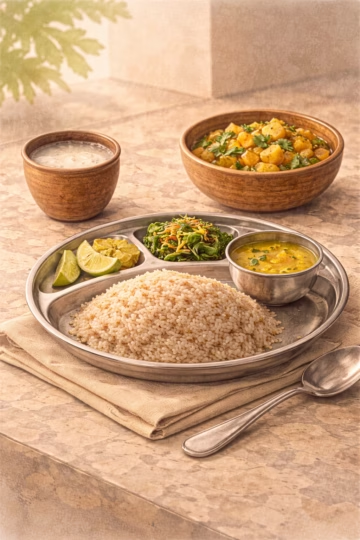
Meals are meant to be complete and spaced.
Constant eating, sipping, or snacking keeps digestion continuously active and prevents proper metabolic rest.
In this approach, food is eaten in clear meals, not spread endlessly across the day.
The body requires time between meals to reset.
Core guidelines
- Eat full, satisfying meals
- Avoid frequent snacking between meals
- Allow clear gaps between eating occasions
- Drink water only when thirsty, not habitually with food
- Avoid “Grazing Behaviour”
Linked deep-dive articles
- Why the Body Needs Gaps Between Meals
- Hunger vs Habit: Learning the Difference
- Snacking Culture and Digestive Fatigue
One-line takeaway
Eat in meals, not moments — digestion needs both activity and rest.
Note:
“Note: Individuals with diabetes, hypoglycemia, or specific metabolic conditions may require different meal timing patterns. Consult your healthcare provider before changing meal frequency.”
One Millet at a Time — The Discipline of Rotation
(Clarity comes from simplicity, not mixing.)
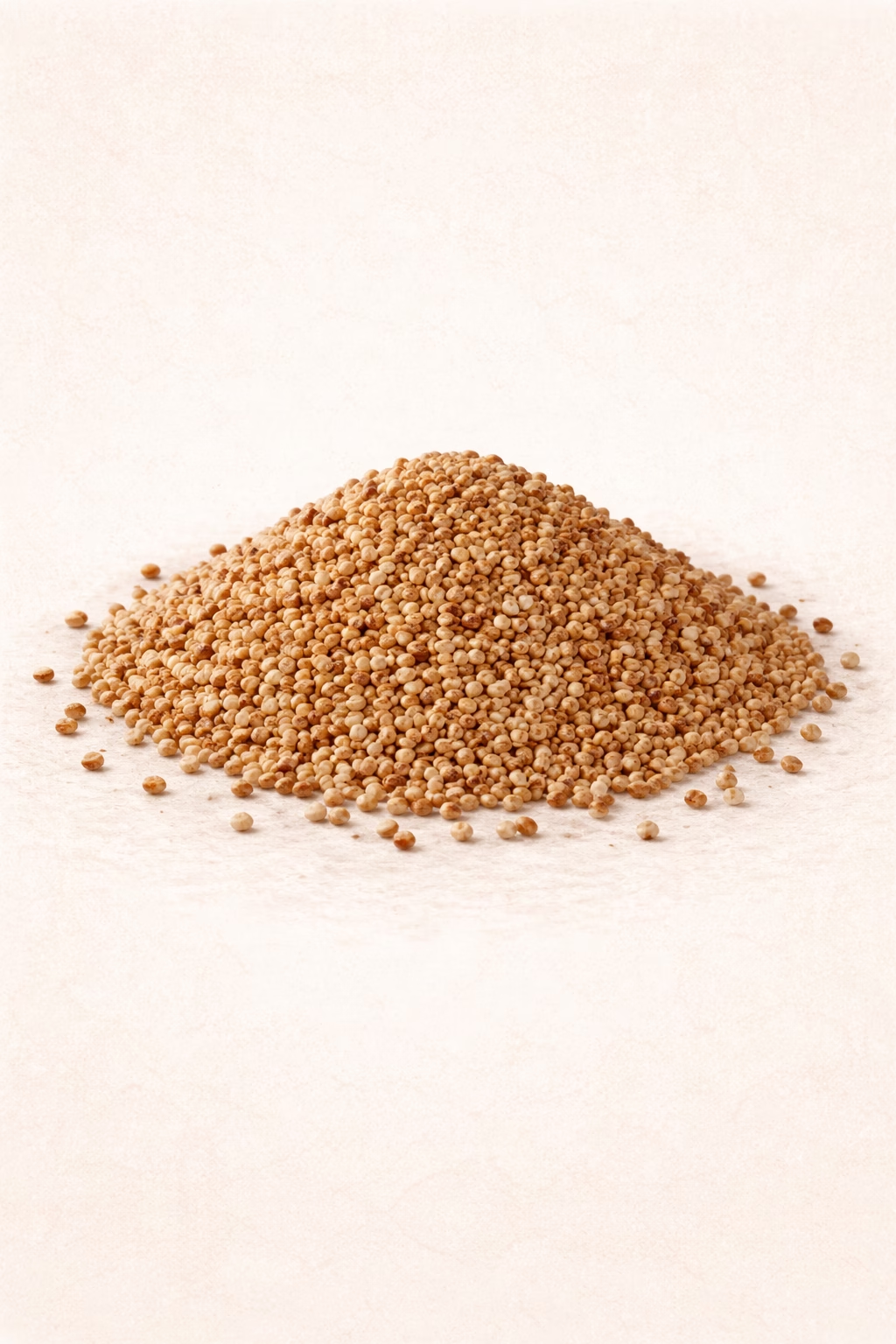
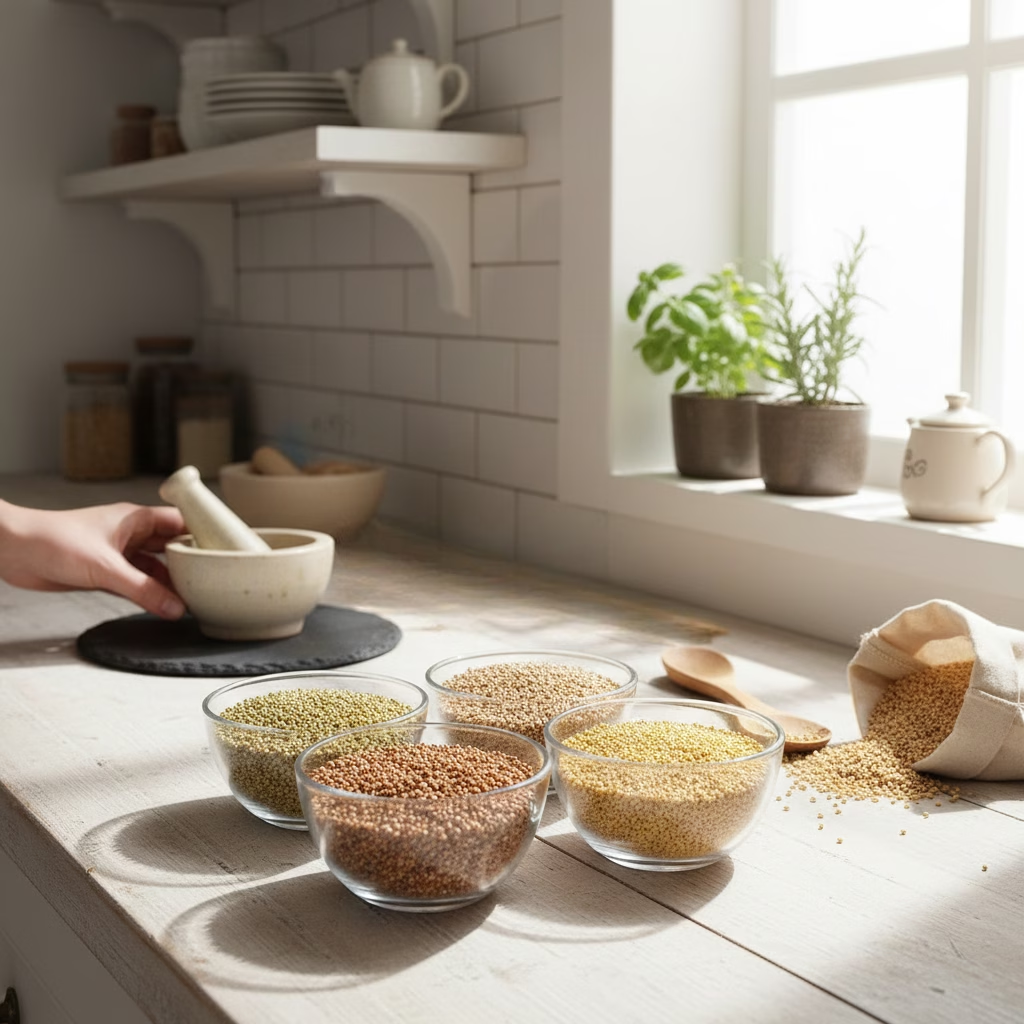
Use only one millet variety at a time.
Ideally, the same millet is used for one full day, and preferably for two consecutive days, before rotating to another millet.
Mixing multiple millets in the same day or meal is discouraged.
Rotation brings diversity.
Mixing brings confusion.
Core guidelines
-
Core guidelines (always visible)
- Choose one positive millet for the day
- Use the same millet across meals that day
- Prefer 2 consecutive days before changing
- Rotate millets over time
- Use all the five Positive Millets ( Foxtail, Browntop, Little, Kodo & Barnyard Millets)
- Avoid millet mixtures and “multi-millet” products
This applies to:
- Ambali
- Breakfast
- Lunch / dinner
Linked deep-dive articles
-
Why Millets Are Your Smart Choice: The Secret to Slow, Steady Energy
- Is It Unethical to Eat Rice and Wheat? A Rational, Scientific, Ecological & Ethical Inquiry
- Why the Buchhi Method is the Ultimate Standard for Positive Millets
- 🏆 The Roodi 2026 Health Grain Awards. – “And the Award Goes To…”
- Why Mixing Millets Is Not the Same as Diversity
- Understanding Millet Rotation
- Traditional Grain Wisdom: Variety Over Time
One-line takeaway
Choose simplicity per day, and diversity over time.
Let’s Pause here
You’ve reached a natural stopping point.
There is no need to continue immediately.
If it feels natural, take one slow breath.
Take a moment to notice what feels clear — and what does not.
Return to Table of Contents Continue when ready
Bookmark or save this page here
Part V — Deepen Nourishment
Once structure is steady, refinement becomes possible.
These practices are layered — not mandatory — and work best when rhythm already exists.
Kashaya — Herbal Intelligence, Taken with Respect
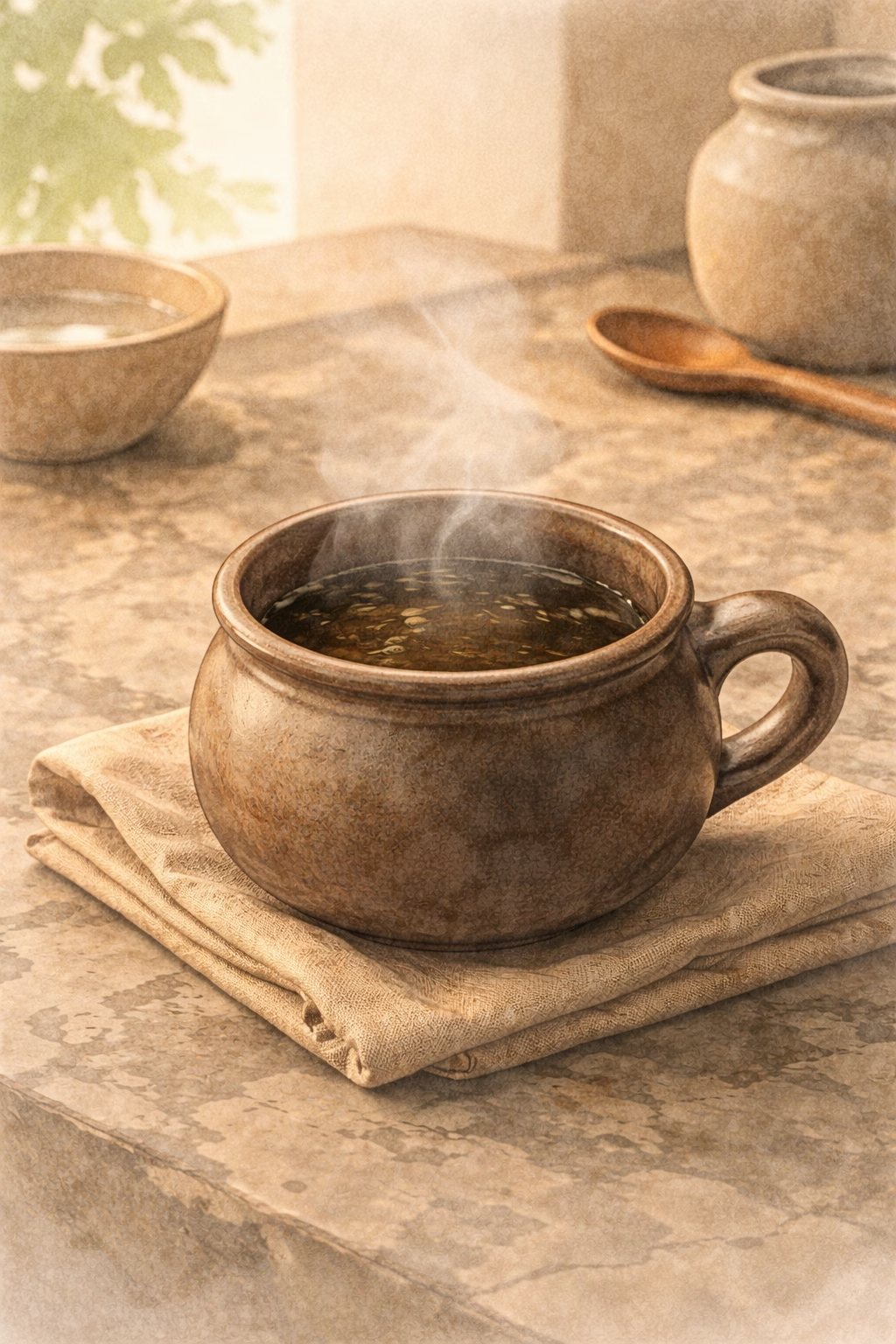
Kashaya is a traditional herbal decoction prepared from a single plant source using a specific method and timing.
Unlike tea, coffee, or wellness drinks, kashaya is not consumed casually or indefinitely. It is:
- Prepared fresh each time
- Rotated weekly to prevent adaptation
- Taken on an empty stomach for direct digestive contact
- Treated as an intentional practice, not a beverage
Important distinction: Kashaya is not tea. Tea contains caffeine and tannins; kashaya is a single-herb water extract prepared specifically for digestive contact.
Its effectiveness in traditional use depends not only on what plant is used, but how it is prepared, how long it is boiled, and how it is rotated.
Precision and restraint are integral to this practice.
Linked deep-dive articles
-
How to Prepare Kashaya Correctly (Step-by-Step) Herbal Decoction Recipe
- Why Kashaya Is Not Tea
- The Logic Behind Weekly Rotation
- Common Kashaya Preparation Errors
Commonly Used Leaves
• Large Leaves: Guava, Peepal, and Betel leaves. Use only after consulting a health care professional
• Small Leaves/Herbs: Tulsi (Holy Basil), Mint, and Fenugreek
Important Note: The information provided is for general educational purposes and is not intended as medical advice. Individuals with medical conditions or those on medication should consult a healthcare professional before making significant dietary changes.
One-line summary:
Kashaya is a traditional herbal decoction taken with precision, rotation, and respect—not a casual beverage.
Oils — Fat as a Messenger
(Oils are not just calories; they are signals that influence structure, hormones, and the nervous system.)
Fats are essential macronutrients required for building organs, supporting the brain, and maintaining the nervous system.
In this lifestyle, oils are not treated as flavoring agents or bulk energy, but as biologically active substances.
Only bull-driven wooden press (ghani) oils, extracted at low temperature and normal pressure, are recommended.
They should be stored exclusively in amber-colored glass bottles or traditional clay pots. Amber glass is crucial as it filters out UV light, preventing oxidative rancidity.
The quality of fat matters more than the quantity.
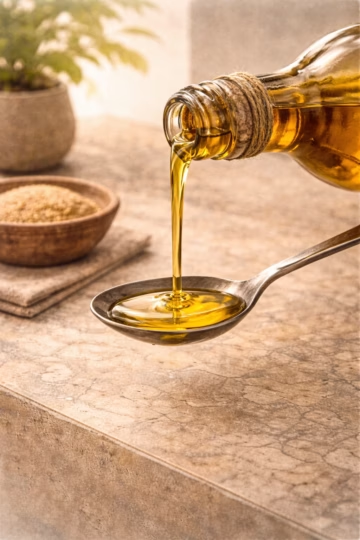
Why Traditional Ghani Oils Are Emphasized
Bull-driven wooden press oils :
- Are extracted at low RPM maintaining room temperature
- Avoid chemical solvents
- Retain natural antioxidants and fatty acid structure
- Do not undergo deodorising or bleaching
This preserves the oil’s biological integrity, not just taste.
Why Refined Oils Are Avoided
Refined oils are avoided because they typically involve:
- High heat and pressure during processing
- Chemical refining steps
- Loss of natural antioxidants
- Oxidation of fatty acids
Additionally, they are often:
- Stored and sold in plastic
- Stripped of their original nutritional context
This makes refined oils fundamentally different substances from traditional oils, even if the source seed is the same.
Traditional Oil Intake (Implementation)
Quantity
- 2 teaspoons of the prescribed oil, Children 3 teaspoons.
- Taken directly, not mixed with food
Timing
- Taken on an empty stomach
- Maintain an approximate 30-minute gap after Kashaya
- Maintain another approximate 30-minute gap before Ambali or food
This spacing reduces overlap and digestive confusion.
Rotation Rule for Oils
One oil variety is used for one week at a time, then rotated.
Rotation is followed because:
- Different oils contain different fatty acid profiles
- Repetition leads to adaptation
- Diversity supports balance
Oils are not meant to be consumed blindly or permanently.
Linked deep-dive articles
- Understanding Oil Rotation
- Cooking with Oils Without Damage
- How to Store Oils Safely at Home
Note: Some individuals may experience digestive discomfort. Start with 1 teaspoon and increase gradually. Those taking fat-soluble medications should consult their pharmacist or doctor
One-line summary:
Traditional oils are biologically active—use them with rotation, not repetition.
Ambali — A Light, Living Fermented Food
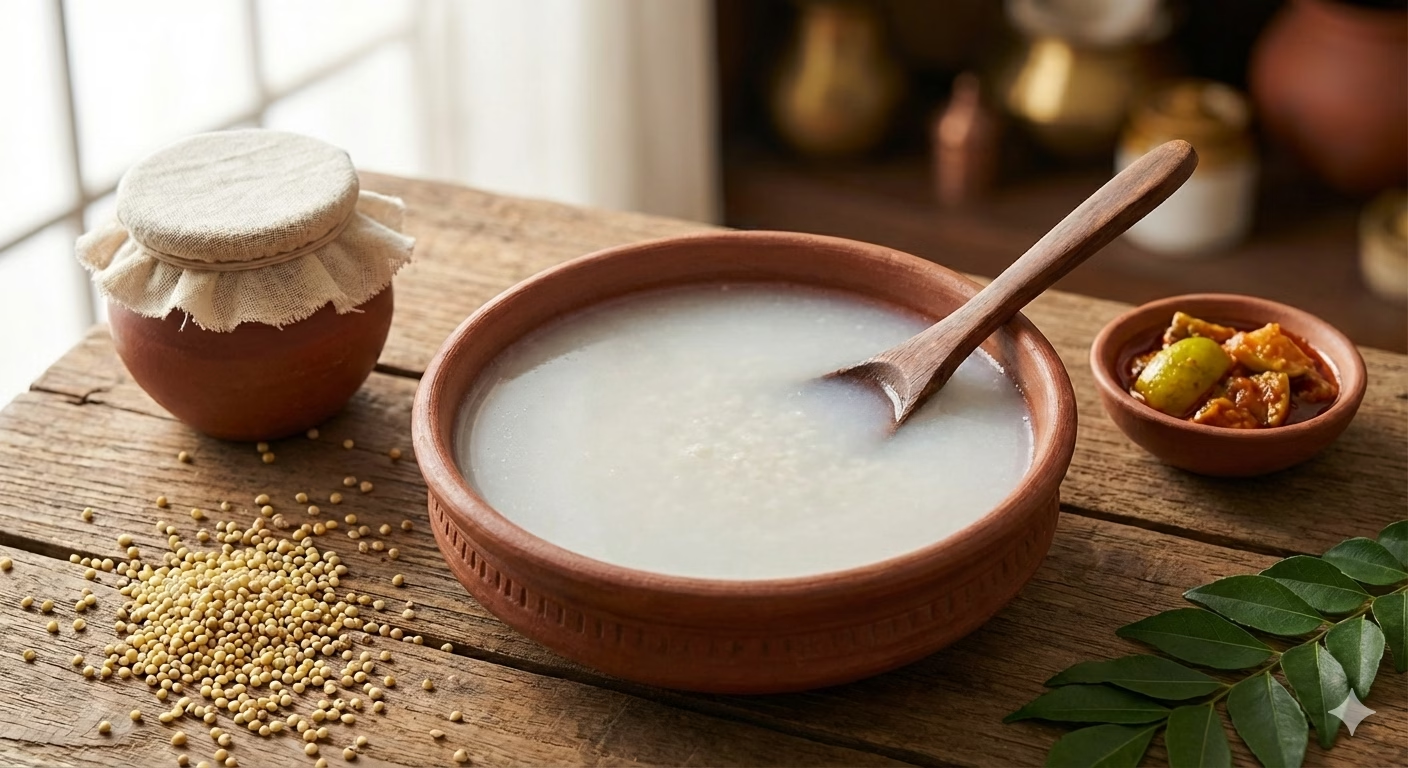
Ambali is a naturally fermented millet preparation designed for digestive compatibility and microbial balance—not satiety.
In its refined form (often called Ambali 2.0), it is prepared very light:
- Extremely small quantity of millet (~5 grams / 1 teaspoon)
- High water ratio (~500 ml)
- Single millet variety at a time, rotated cyclically
- Natural fermentation at room temperature
- No reheating, no refrigeration
This is not porridge. This is not a meal.
Ambali is designed to pass quickly through the stomach and reach the intestines, where fermentation and microbial activity matter most.
If you’re expecting fullness or satiety, you’re approaching this incorrectly. Ambali’s purpose in traditional practice is understood to be metabolic and microbial, not caloric.

Key Principles
- Very small millet quantity (~5 g)
- High water ratio (~500 ml)
- Single millet at a time, rotated cyclically
- Natural, breathable fermentation
- No reheating, no refrigeration
Do not use:
- Polished millets
- Mixed millets
Linked deep-dive articles
🔗 Learning & demonstrations (expandable or footer)
For visual guidance and updated practices, refer to the
NOTE:
– Discard if: foul smell, mold visible, pink/orange discoloration, slimy texture
– Use clean utensils; contamination can cause foodborne illness
– In hot weather, check after 6 hours to prevent over-fermentation
– Not recommended for: immunocompromised individuals, pregnant women, young children (under 2) without healthcare guidance
– When in doubt, throw it out
One-line summary:
Ambali 2.0 is a light, daily fermented food designed for microbial balance and digestive ease—not satiety.
Let’s Pause here
You’ve reached a natural stopping point.
There is no need to continue immediately.
If it feels natural, take one slow breath.
Take a moment to notice what feels clear — and what does not.
Return to Table of Contents Continue when ready
Bookmark or save this page here
Part VI — The Supportive Environment
Health is shaped not only by food, but by surroundings.
Water, vessels, and daily handling influence comfort in subtle ways.
Water & Vessels
(Water is not just consumed; it is prepared.)
Water is treated as a daily companion to digestion, not as a neutral filler.
How water is stored, handled, and consumed affects comfort, digestion, and routine consistency.
This approach focuses on simple, traditional methods that avoid unnecessary contamination and overstimulation.
Clean, calm water supports a calm digestive environment.

Core practices
- Use clean drinking water, preferably rested in copper
- Store water in clay/earthen, glass, or stainless steel
- Avoid plastic bottles and containers
- Drink water by thirst, not by schedule
Linked deep-dive articles
-
Traditional Water Storage Practices Explained
- Cooking in Mud Pots: Tradition, Science, and Timeless Benefits.
- Why Drinking by Thirst Matters
- Plastic and Daily Exposure: A Practical View
One-line summary:
Treat water gently, store it simply, and drink it when the body asks.
Note : Thirst is generally a reliable guide for most healthy adults in moderate climates. However, elderly individuals, athletes, those in hot environments, or people with certain health conditions may need to drink beyond thirst. Monitor urine color as a hydration indicator (pale yellow is optimal).
Part VII — Uncompromised Simplify
Improvement often comes not from adding more, but from removing what strains the system repeatedly.
What Is Avoided
(Health improves as much by removal as by addition.)
Certain foods and habits are avoided consistently in this approach, not occasionally.
These are not temporary restrictions or moral rules, but foundational boundaries understood to prevent repeated stress on digestion and metabolism.
Avoidance here is about simplicity and reduction, not deprivation.
What is removed creates space for balance to return.
Core avoid list
The following are avoided as part of daily living:
- Paddy rice
- Wheat
- Maida (refined flour)
- Refined sugar & Cane Jaggery (use palm jaggery instead)
- Tea and coffee
- Refined / industrial oils
- Packaged and ultra-processed foods
These are not “occasional treats” within this framework.
Linked deep-dive articles
-
Why Removal Often Heals Faster Than Addition
- From Refined to Whole: Understanding the Shift
- Consistency Over Willpower
- Issues with milk
What you consistently avoid determines how easily the body can recover.
Part VIII — Expand the Field
Health extends beyond the individual body.
It includes how we relate to nature, community, and daily conduct.
Connection with Nature — Health Beyond the Body
Human health is deeply influenced by daily contact with natural environments.
Modern indoor living reduces exposure to soil, plants, sunlight, and open air — all of which quietly regulate the body and mind.
This approach encourages regular, ordinary contact with nature, not retreats or escapes.
Nature does not need to be visited.
It needs to be lived with.

Core practices
- Spend time outdoors daily, even briefly
- Engage with soil, plants, or open air
- Walk barefoot on natural ground when possible
- Prefer natural surroundings over enclosed spaces
These are supportive habits, not tasks.
Linked deep-dive articles
-
Why Modern Life Disconnects Us from Nature
- Gardening as a Health Practice
- Raising Children with Natural Awareness
One-line summary:
Health deepens when daily life includes soil, sunlight, and open air.
Mental & Social Conduct — Living Beyond the Plate
(Health is shaped by how we think, relate, and live with others.)
Food and routine support the body, but conduct shapes the mind and social environment.
Health is sustained not only by what is eaten, but by gratitude, responsibility, and participation in community life.
This section focuses on simple, lived attitudes, not ideals.
How we live with others feeds us every day.
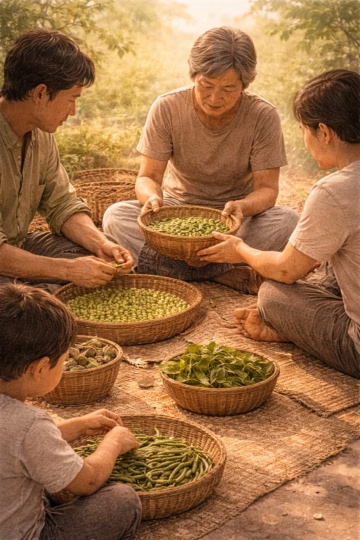
Core Principles
- Cultivate gratitude in daily life
- Engage in community and family activity
- Care for the environment in ordinary ways
- Teach and involve children in food and nature awareness
These are not separate practices — they are ways of living.
Linked deep-dive articles
-
Remembering What Matters: Lessons from Nature, Ancients, and the Heart
-
Nature our greatest asset ?
-
Why Community Matters for Health
- Teaching Food Awareness to Children
- Environmental Care as a Health Practice
Health matures when care extends beyond the self.
Closing — Living the Rhythm
There is no final step in a daily rhythm.
The practices described here are not meant to be completed once, but revisited as life shifts and seasons change.
Begin with one layer.
Allow it to settle.
Return when ready.
Health does not come from intensity.
It comes from alignment repeated quietly.
This page remains here as a reference — not a requirement.
TOOLS & RESOURCES
Downloads
- Download Complete Lifestyle Guide (PDF)
Comprehensive reference of all practices in one document - Download Daily Checklist (PDF)
- Printable daily tracking sheet with rotation reminders
- [View Daily Rhythm Infographic
- Visual timeline of practices throughout the day
Further Reading & Listening — Dr. Khadar Valli
Official Channels & Published Work
The framework presented on this page is influenced by the food and lifestyle teachings of Dr. Khadar Valli and related work on traditional grains, dietary rhythm, and daily living practices.
For deeper understanding, the following official channels provide public lectures and discussions.
Official Video Channels
This channel hosts lectures, demonstrations, and discussions aligned with the Siridhanya lifestyle approach.
Kashaya, Oils & Ambali Discussions
This channel includes structured talks, millet rotation explanations, and community sessions.
Community Q&A Sessions:
These links open curated searches within verified channels so that current and relevant public talks can be accessed. Content availability may evolve over time.
Books & Written Material (English)
-
Dr Khadar Lifestyle (The Siri Jeevana) – The Science and Art of Living – English protocols PDF:
https://brahmavad.in/wp-content/uploads/2021/08/Protocols-Book-English-Dr-Khadar-Lifestyle-19-July-2021.pdf -
Siri Jagatthu (Siri Jagatthu – Our Bounty) – English PDF:
https://www.scribd.com/document/518630594/Siri-Jagatthu-English-2021 -
Lifestyle Protocols (Siri Jeevanam / Health Protocols) – English protocols (Siridhanya lifestyle):
https://www.siridhanyamillet.com/wp-content/uploads/2020/09/Siridhanya-Protocols-Book-English-Dr-Khadar-Sep2020.pdf -
Paka Siri (Cooking with Siridhanya) – English eBook “Cooking Made Easy with Siridhanya”:
https://store.wholesometales.com/product/books/paka-siri-english-ebook-cooking-made-easy-with-siridhanya-by-biophilians-kitchen/
Additional Online Resources (English)
-
Books overview and related material:
https://www.sirijeevan.org/books -
Online lifestyle protocols page (web version, with links to English PDF and other languages):
https://www.sirijeevan.org/protocols
How to approach these resources
- Prefer long-form talks over short clips
- Listen for patterns and principles.
- Avoid turning context-specific guidance into rigid rules
- Cross-check practical steps before applying them strictly
- Understanding grows with repetition and patience, not speed.
Note on interpretation
- This page does not replace original material.
- It serves as a structured reference, helping readers navigate and apply ideas responsibly.
- Readers are encouraged to consult original sources and adapt practices sensibly.
Disclaimer
This guide presents a traditional lifestyle approach inspired by observational knowledge and lived practice. It is intended for educational purposes only and does not constitute medical advice, diagnosis, or treatment.
Individual needs vary based on health status, age, medications, and personal circumstances. Readers are encouraged to adapt practices gradually and consult qualified healthcare professionals when appropriate.
No specific outcomes are guaranteed or implied.








Leave A Comment