
Is It Unethical to Eat Rice and Wheat? A Rational, Scientific, Ecological & Ethical Inquiry
What We Eat and the Future We’re Building

The Hidden Cost of Our Daily Bread: Rethinking Rice and Wheat
Introduction: A Question We Never Asked
For most of us, rice or wheat isn’t a choice—it’s inheritance. It appears on our plates at birth and remains until we pass. We associate it with comfort, celebration, and identity itself.
But what if the foods we never questioned are quietly reshaping our world in ways we never intended?
This isn’t about condemning tradition or attacking culture. Rice and wheat hold sacred places in our rituals and memories. Yet the scale and method of their production today bears little resemblance to how our ancestors grew and consumed them.
A Note on Context: This article examines modern agricultural systems—not cultural traditions or individual food choices. It offers perspective for those interested in understanding the broader impact of industrial-scale grain cultivation. All dietary decisions should be made in consultation with healthcare professionals based on individual needs.
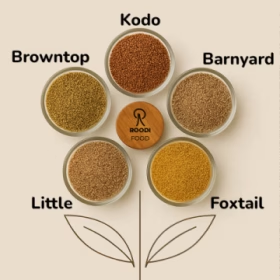
Traditionally, rice grew sparsely along riverbanks. Wheat appeared seasonally in select climates. Across most of India—and much of the ancient world—millets were the foundation. This memory survives in language itself: saame akki (little millet rice), navane akki (foxtail millet rice), udalu akki (barnyard millet rice). The word “rice” itself once meant dehusked grain—any dehusked grain.
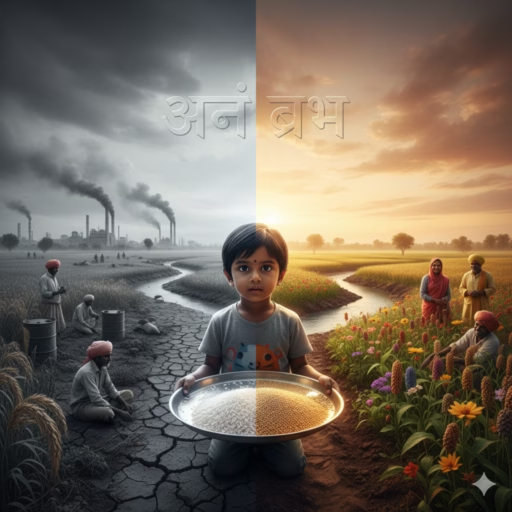
Today’s rice-wheat dominance is recent—a product of the Green Revolution, dam construction, chemical dependency, and market forces. Not ancient wisdom, but modern disruption.
This article examines a difficult question through six interconnected lenses: water, soil, health, farmers, culture, and our collective future.
1. Water Ethics: When Food Becomes Theft from Tomorrow
The numbers are stark and undeniable:
| Crop | Water Required per Kilogram |
|---|---|
| Rice | 8,000–10,000 litres |
| Wheat | 7,000–9,000 litres |
| Millets | 200–300 litres |
One kilogram of rice consumes the drinking water a human needs for years.
What This Actually Means
This isn’t just agriculture—it’s systematic water extraction that our grandchildren will inherit as scarcity.
- Punjab’s aquifers, once abundant, now face exhaustion within decades
- Farmers drill deeper boreholes each year, increasing costs and energy use
- Karnataka’s water wars intensify as irrigation demands compete with drinking needs
- Interstate conflicts over river water are no longer political—they’re existential
The Infrastructure Trap
This water consumption was never natural. It became possible only through:
- Massive dam construction
- Extensive canal networks
- Electric tubewells and pumps
- Government subsidies for electricity and water
- Engineering that displaced communities and ecosystems
Before modern irrigation infrastructure, rice and wheat at this scale were impossible.
Millets, meanwhile, grow with rainfall. They adapted to Earth’s natural water cycles over millennia.
Ethical question: When a food system requires engineering the landscape itself and depleting irreplaceable aquifers, while alternatives thrive naturally—which path honors life?
2. Soil and Ecology: The Slow Poisoning of Earth
Modern rice and wheat cultivation isn’t farming—it’s industrial extraction disguised as agriculture.
The Chemical Dependency Cycle
- Synthetic fertilizers (urea, DAP, potash)—killing soil microorganisms
- Pesticides—destroying beneficial insects and pollinators
- Herbicides—eliminating plant diversity
- Fungicides—disrupting soil fungi networks
- Hybrid/GMO seeds—eliminating farmer seed sovereignty
This creates:
- Dead, compacted soil requiring more chemicals each season
- Chemical runoff poisoning rivers and groundwater
- Loss of biodiversity—both above and below ground
- Seed monopolies where farmers must buy patented varieties annually
- A system that benefits chemical corporations, not farmers or consumers
What Millets Do Instead
- Grow without synthetic inputs
- Restore soil fertility through deep root systems
- Support diverse microbial and insect life
- Require no patents—farmers save and exchange seeds freely
- Build soil carbon, helping climate stability
Ethical question: Should we support a food system that kills the soil that feeds us, when alternatives heal it?
3. Health Ethics: When “Normal” Food Behaves Like Fast Food
Modern nutritional science reveals something our bodies already know: polished rice and refined wheat behave metabolically like fast food.
The Glucose Problem
Rice and wheat today:
- Extremely low fiber content
- Carbohydrate-to-fiber ratios of 65:1 to 400:1
- Rapid glucose absorption (15-45 minutes)
- Massive insulin spikes followed by crashes
This pattern strongly correlates with:
- Type 2 diabetes epidemic
- Obesity and metabolic syndrome
- Polycystic ovary syndrome (PCOS)
- Hormonal disruptions
- Fertility challenges in both men and women
- Gut microbiome destruction
- Chronic inflammation
- Mental health instability
The Millet Difference
Millets maintain:
- High natural fiber
- Carbohydrate-to-fiber ratios of 5:1 to 12:1
- Slow, steady glucose release over hours
- Stable energy without crashes
- Support for gut bacteria diversity
This isn’t opinion—it’s measurable physiology.
How Food Affects Mind and Clarity
Modern neuroscience confirms what ancient food wisdom always knew: what we eat shapes how we think, feel, and behave.
Some foods create:
- Agitation and restlessness (rapid sugar spikes, crashes, cravings)
- Dullness and lethargy (heavy, highly processed, chemically laden)
- Balance and clarity (slow energy release, nutrient density, natural wholeness)
Ancient Indian systems called these qualities rajasik, tamasik, and satvik—but the principle is universal and scientifically valid.
Highly refined grains with rapid glucose absorption tend to create metabolic stress, mood swings, and energy instability. Whole grains with fiber maintain steadiness.
Ethical question: When a society knowingly adopts staples that contribute to widespread disease—while healthier alternatives exist—is that just cultural preference, or collective harm?
4. Farmer Ethics: The Human Cost We Never See
Every bowl of rice or wheat carries invisible suffering.
What Rice-Wheat Cultivation Demands From Farmers
- High-cost irrigation (electricity, diesel for pumps)
- Expensive hybrid seeds that can’t be saved
- Mandatory chemical inputs (fertilizers, pesticides)
- Vulnerability to crop failure and debt
- Dependence on middlemen and corporations
- Market prices that don’t cover costs
- Trapped in cycles of loans
Result: Rising farmer distress, migration, and tragically—suicide rates highest in rice-wheat belt regions.
What Millet Cultivation Offers
- Near-zero input costs
- Climate resilience (drought, heat, pests)
- Seed sovereignty—farmers save their own seeds
- Suitable for small, marginal, dryland farmers
- Multiple harvests possible
- Strong nutritional and market value
Ethical question: Can a food system built on farmer suffering ever be called sustainable or just?
5. Cultural Truth: Recovering What Was Lost
The Great Forgetting
We’re told rice and wheat are “our tradition”—but history tells a different story.
For thousands of years:
- Millets were the primary staple across India
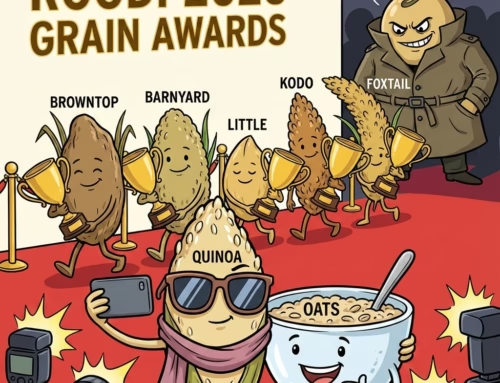
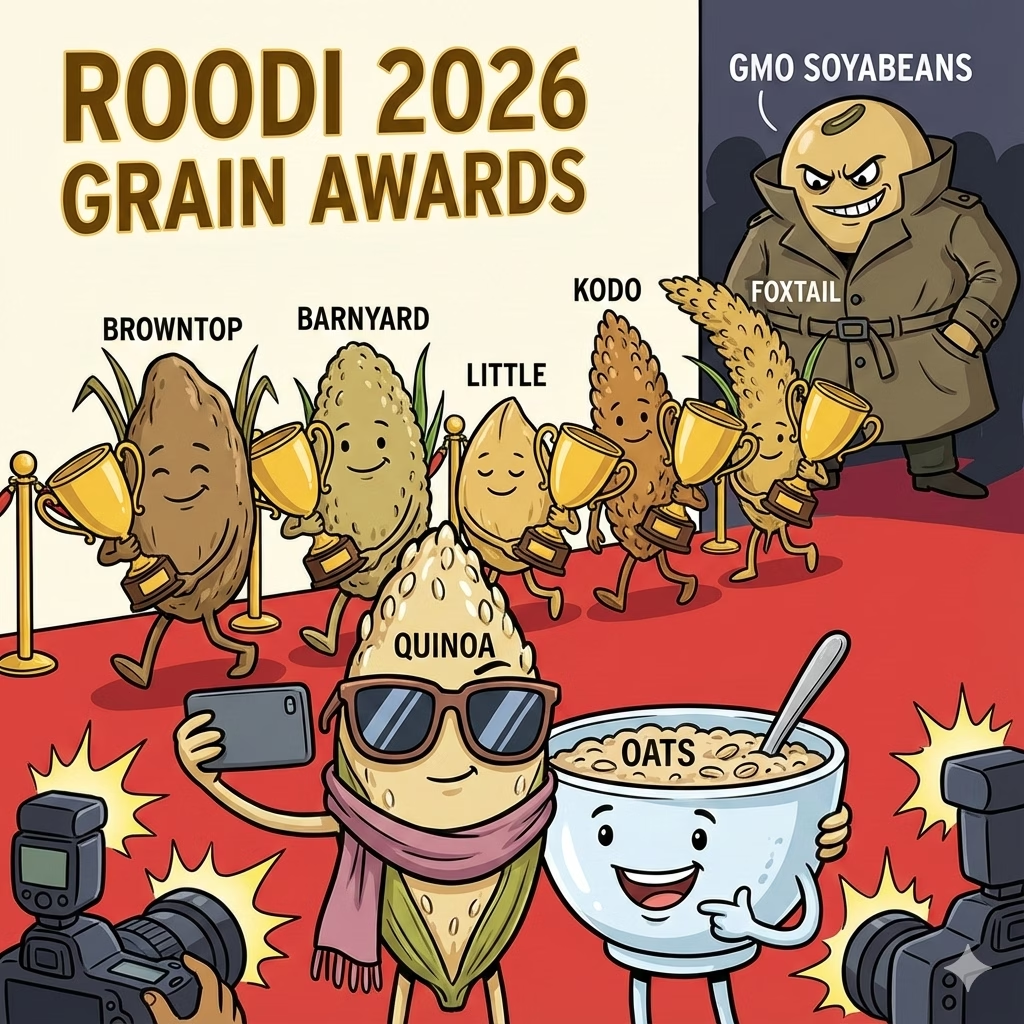
- Foxtail, barnyard, kodo, little, and browntop millets sustained civilizations
- Ayurveda and Siddha classified millets as balancing and health-promoting
- Rice appeared seasonally, regionally, minimally processed
Archaeological evidence shows millet cultivation predates rice in many regions. Tribal and rural communities maintained millet traditions even as urban areas forgot.
The shift to rice-wheat dominance happened in living memory—driven by:
- Green Revolution policies (1960s-70s)
- Government procurement favoring rice-wheat
- Irrigation infrastructure expansion
- Marketing that labeled millets as “poor people’s food”
- Subsidies making rice artificially cheap
This wasn’t tradition evolving—this was tradition interrupted.
Language Remembers
The word akki didn’t originally mean only rice—it meant grain, any grain. When our ancestors said akki, they often meant millets. We forgot, but the language didn’t.
6. Civilizational Responsibility: What Are We Building?
Every meal is a vote. Every grain choice shapes the future.
When We Choose Rice and Wheat at Current Scale, We Support:
Ecologically:
- Groundwater depletion
- Soil death
- Chemical pollution
- Biodiversity collapse
- Climate instability (methane from paddy fields)
Economically:
- Farmer debt and distress
- Subsidies in lakhs of crores to chemical companies
- Food insecurity hidden by artificial cheapness
- Seed patent monopolies
Health-wise:
- Metabolic disease epidemic
- Gut health destruction
- Healthcare system burden
- Reduced quality of life across generations
Civilizationally:
- Short-term thinking over long-term wisdom
- Dependence over sovereignty
- Extraction over regeneration
When We Choose Millets, We Support:
- Water conservation for future generations
- Soil regeneration that builds fertility
- Farmer dignity and economic stability
- Health resilience through balanced nutrition
- Food sovereignty free from corporate control
- Ecological harmony aligned with nature’s rhythms
- Cultural wisdom reconnected with heritage
Conclusion: Your Plate Is Your Philosophy
The evidence is clear. At current scale and method of production, rice and wheat cultivation carries profound ethical costs:
✗ Depletes water faster than nature replenishes
✗ Destroys soil and biodiversity
✗ Traps farmers in suffering
✗ Contributes to metabolic disease
✗ Survives only through subsidies and chemicals
✗ Requires massive infrastructure with ecological costs
Millets offer a different path—one that honors water, soil, farmers, health, and future generations.
This Is Not About Perfection
You don’t need to never eat rice again. But awareness creates choice, and choice creates change.
Even shifting a part of your grain consumption toward millets creates ripples:
- Your body experiences better blood sugar balance
- Your purchase supports millet farmers
- Your household reduces its water footprint
- Your children inherit slightly better soil and aquifers
- Your community witnesses what’s possible
- The country saves a lot of money given to foreign private companies in subsidies.
The Question That Matters
Not: “Should I feel guilty about rice?”
But: “What kind of world am I building with my daily choices—and which grain aligns with the future I want?”
Your plate isn’t just food.
Your grain isn’t just preference.
Your daily meal is your philosophy made visible.
When we choose foods that respect nature, we become people who respect life.
When we choose grains that restore soil, we restore our relationship with Earth.
When we choose wisely, we give our children a chance.
The future isn’t decided in parliaments or boardrooms alone.
It’s shaped quietly, powerfully, in ordinary kitchens—one meal at a time.
A Final Reflection
“From food, all beings are born; by food, they live; into food they return.”
— Taittiriya Upanishad
If food is the cycle of life itself, then food that harms Earth harms everything.
Millets are not a trend returning—they are wisdom resurfacing.
The choice is ours. The time is now.
Disclaimer
This article presents ecological, cultural, nutritional, and philosophical perspectives on food choices for public awareness and discussion. It does not diagnose, treat, cure, or prevent any disease, nor does it provide medical advice. Individual dietary needs vary based on health status, age, lifestyle, and other factors. For personalized nutrition or health guidance, please consult a qualified healthcare or nutrition professional, in accordance with FSSAI recommendations and guidelines.
Data Sources: Information compiled from agricultural research, nutritional databases, environmental studies, and historical sources. Specific figures represent approximate ranges; readers are encouraged to verify independently.
Attribution: This article references work by various researchers including Dr. Khadar Vali and others advocating for millet revival. Mention does not constitute medical endorsement or claims about disease treatment.




Leave A Comment