

Why Choose Barnyard Millet?
Learn Once Benefit for Life
This millet has been part of regional food cultures for generations, especially in simple, fermented, and everyday preparations.
Watch
Read



How to Use & Cook
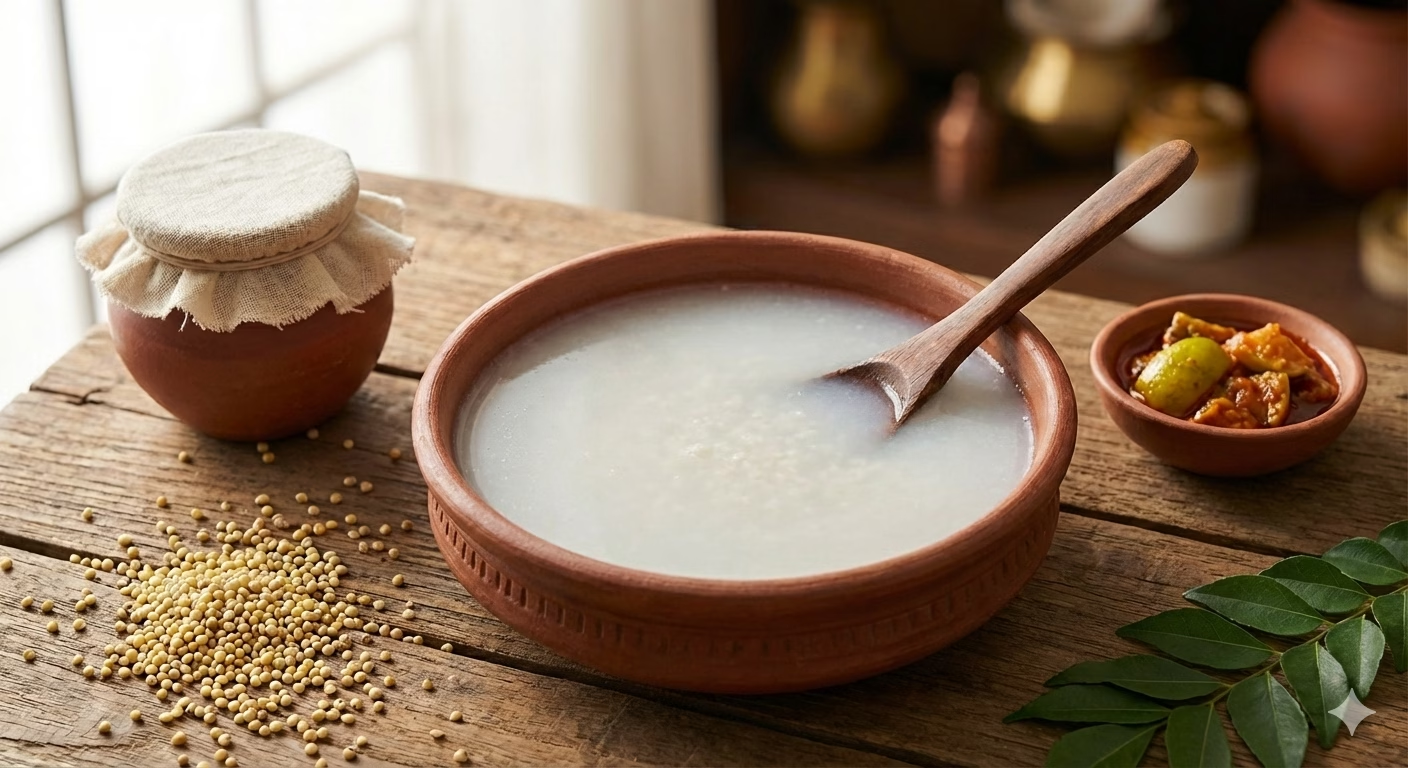
Soak for 6–8 hours. Cook like rice using 1 cup millet with 2–2.5 cups water. Used in Breakfast items such as Ambali (Fermented Porridge), Idli, Dosa, Rava Dosa, Pullattu (Sour Dosa), Curd Uttapam, Upma, Poha (Beaten Rice) Upma, Roti, Vada, and KudumuluVada, and Kudumulu
Rice-based and main course preparations include Biryani, Pulihora, Pulao, Vegetable Rice, Cumin (Jeera) Rice, For snacks and savouries, you can make Pakora, Coconut Pakora (Muttilu), Dhokla, Patties (Tapila Billalu), Vadappas, Kara Boondi, Chekodi, Savoury or Spicy Shells, Karam Bundi, and Vadiyalu
Desserts and sweets that can be prepared include Gulab Jamun, Appalu, Boorelu, Sesame Dumplings (Karanji), Pudding, and various other sweet dishes
Additionally, it can be used to produce Plant-based Milk, Curd, and Biscuits or Cookies
Usage
Best to be rotated with other 5 positive millets as part of a diverse diet
Cooking Videos
Important Usage Notes
About this Product
Barnyard millet is a traditional grain valued for its light texture and adaptability in Indian kitchens. When minimally processed, it retains its natural fiber layers and germ, influencing both cooking behaviour and taste.
This variant is Buchhi dehusked—a gentle, traditional method that removes only the outer husk without polishing or heating the grain. The result is a millet that stays structurally intact and closer to its natural form.
Traditional Context
Barnyard Millet has a deep history across India and Asia, often referred to as “Vrat ka Chawal” in North India because of its purity and sustaining energy during fasts. In regions like Uttarakhand and Nepal, it is a traditional dietary staple given to lactating mothers to support recovery and nourishment. It has long been recognized in traditional systems for its “cooling” and “cleansing” nature.
Nutritional Nature
Barnyard Millet is characterized by its high dietary fiber (10g per 100g) and low Glycemic Load. It contains essential micronutrients including Iron (2.9mg), Niacin, and Thiamin. The fiber is intricately woven with the carbohydrates, facilitating a gradual breakdown and absorption of nutrients.
FAQs
Please note that the views and information presented on external websites are those of the respective authors and do not necessarily reflect the views of Roodi Food.
Detailed Description
Barnyard Millet is a traditional grain, rich in fiber and a source of iron. It has been valued in traditional dietary practices and is recognized for its potential role in supporting metabolic and digestive well-being. This light, creamish millet has a mild taste and is often included in millet-based dietary approaches.
Key Details
-
Botanical Name: Echinochloa esculenta
-
Common Names: Japanese Millet, Sanwa, Kuthiraivali (Tamil), Udalu/Oodalu (Kannada)
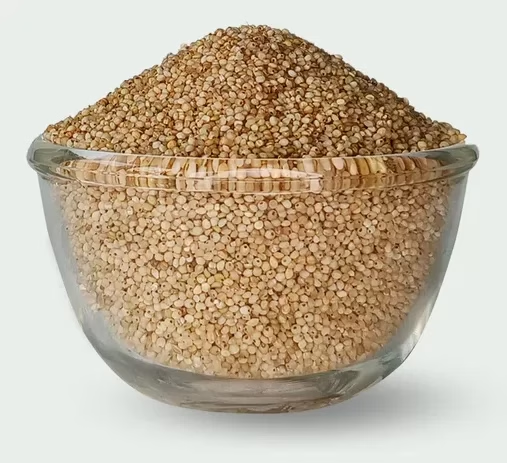
- Appearance: Creamish, flat, slightly broader than Little Millet
Buchhi Dehusked – What You Get
Our Positive Millets are Buchhi dehusked, a gentle traditional method revived by Dr. Khadar Vali and Smt. Mahebunni (Buchhi). Unlike industrial milling, this process focuses on preserving the grain rather than polishing it.
What this means for you:
-
✔ Truly unpolished millet – no artificial shine, no aggressive polishing
-
✔ Natural fiber layers intact – supports slow digestion and steady energy release
-
✔ Plumule (germ) preserved – the grain remains whole and structurally complete
-
✔ Minimal breakage – very low grits compared to factory-milled millets
-
✔ No heat or chemical treatment during dehusking
-
✔ Clean, honest processing closer to the millet’s natural form
Because Buchhi dehusking is a low-impact process, these millets require proper soaking before cooking, which helps improve digestibility and cooking quality.
Nutritional Highlights
-
High in dietary fiber (approx. 10%)
-
Rich in iron
-
Naturally gluten-free
-
Low glycaemic index
Traditional Uses and Potential Benefits (Based on Traditional Knowledge)
- Traditionally included in diets for individuals seeking to manage blood sugar levels due to its high fiber content and potential for a gradual glucose release.
- Traditionally associated with supporting digestive comfort.
- Traditionally associated with supporting general well-being in women post-delivery
These statements are based on traditional knowledge and have not been evaluated by the FSSAI. This product is not intended to diagnose, treat, cure, or prevent any disease. Results may vary.
Recognising Barnyard Millet
-
Slightly flat, creamish grains
-
Looks similar to Little Millet but flatter and lighter in color
-
Choose unpolished grains with outer layers intact for full health benefits
Did You Know?
-
Barnyard Millet is a favourite among birds—thousands perch on its stalks, naturally enriching the soil with their droppings!
-
It’s a soil-healing crop, ideal for regenerating damaged or barren land
-
In Uttarakhand and Nepal, it’s traditionally given to lactating mothers


