
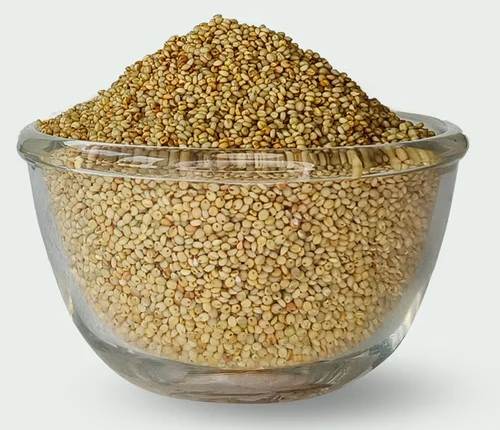
Why Choose Browntop Millet
Learn Once Benefit for Life
With 12.5% fiber, Browntop Millet is nature’s way of supporting a clean digestive system. Unlike polished grains, our unpolished version retains the essential lignans found in the outer layers.
Watch
Read
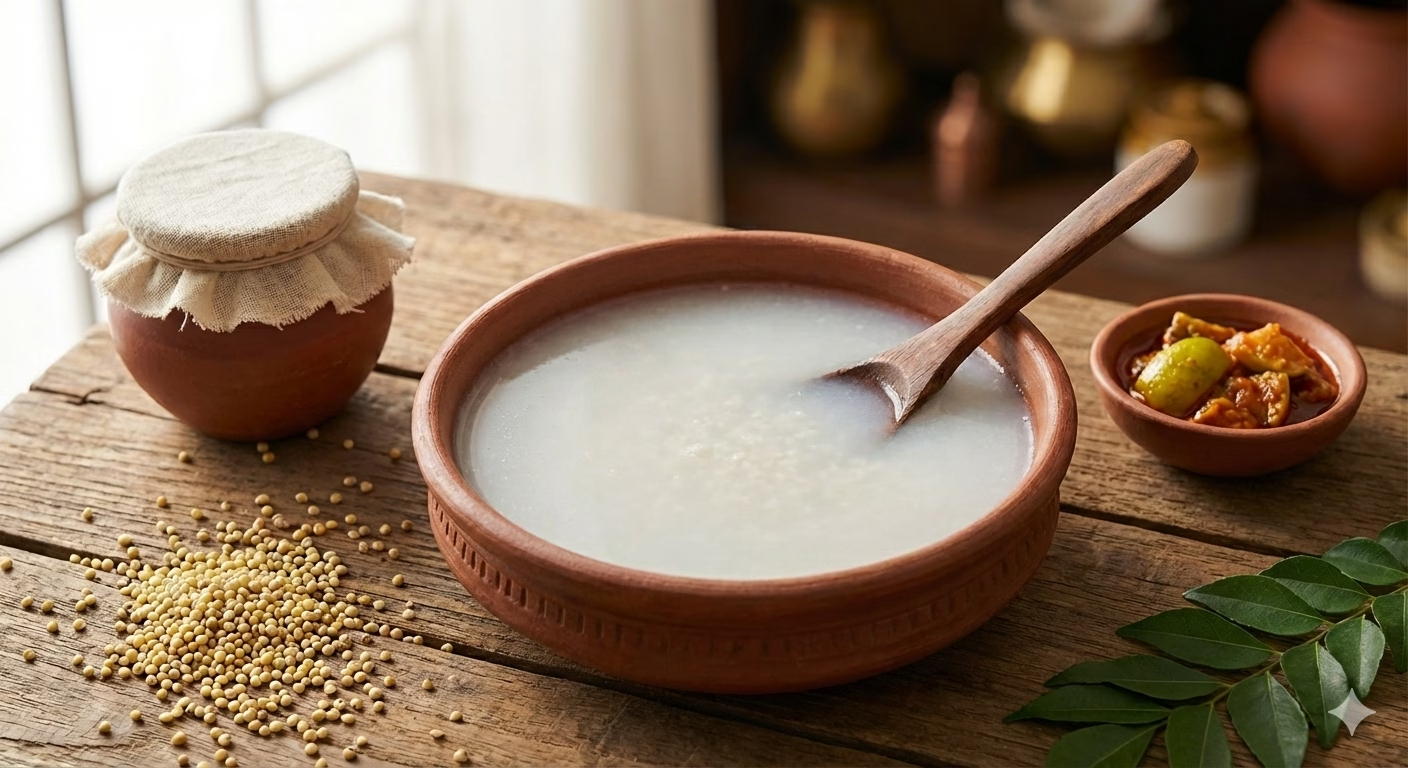



How to Use & Cook
Preparation: Rinse the grains gently. Soak for at least 8 hours to activate enzymes and soften the fiber.
Traditional Method: Use an earthen or clay pot for superior flavor. Use a 1:3 ratio of millet to water.
Bring to a boil, then simmer on low heat until water is absorbed. Let it rest for 10 minutes. Water Ratio: The recommended ratio for Browntop millet is 1 cup of millet to 3.5 cups of water. (If using aged grains, 2.5 cups may suffice, but 3.5 is standard for a soft texture). • Vessel: Use a mud pot (earthenware) or a 304-grade stainless steel vessel. Avoid pressure cookers as they destroy nutrients. • Process: 1. Bring the soaking water to a boil in the cooking vessel. 2. Add a teaspoon of bull-driven ghani oil or desi cow ghee to ensure the rice is fluffy and the grains stay separate. 3. Add the soaked millet and cook on a low flame with the lid partially covered. 4. Once the water is absorbed, turn off the heat, cover fully, and let it rest for 10 minutes before serving
Usage
For balanced nutrition, rotate Browntop Millet with other Siridhanya (Positive Millets) every 2–3 days.
Cooking Videos
Important Usage Notes
About this Product
Our Browntop Millet is a testament to the wisdom of traditional agriculture. Known as one of the “Positive Millets,” it stands out for its extraordinary fiber content of 12.5%. Unlike mass-produced grains that are stripped of their nutrients through aggressive polishing, our grains undergo the Buchhi dehusking process. This manual-inspired method removes only the outermost husk, leaving the nutrient-dense bran and the vital germ intact.
When you choose this millet, you are choosing a grain that is as close to its natural state as possible. It is a slow-release carbohydrate source, meaning it provides steady energy without the spikes associated with refined grains. Whether you are making a fluffy pilaf, a traditional dosa, or a fermented Ambali, this millet brings a rich, nutty flavor and a wealth of traditional benefits to your table.
Traditional Context
Historically, Browntop Millet has been a staple in dryland communities, often referred to as a “famine-reserve” crop due to its extreme resilience. It holds a sacred place in various traditional food systems and was even noted in ancient texts for its sustaining power. In the lineage of Siridhanya (Positive Millets), it is revered for its “cleansing” nature, traditionally used to support long-term internal well-being.
Nutritional Nature
Browntop Millet is naturally abundant in insoluble fiber (12.5%) and essential micronutrients. It contains Lignans, Lecithin, and a balanced profile of minerals including Magnesium and Iron, which contribute to the maintenance of normal physiological functions.
FAQs
Please note that the views and information presented on external websites are those of the respective authors and do not necessarily reflect the views of Roodi Food.
Detailed Description
Scientific Name: Urochloa ramosa (formerly Panicum ramosum)
Browntop Millet (Korale / Andakorra) – Recognized as one of the Five Positive Millets. It has been traditionally included in diets and is noted for its fiber content (12.5%), minerals, and lignans, which are understood to play a role in digestive health and overall well-being. Lignans are a subject of ongoing scientific research regarding their potential health benefits.
✅ Key Highlights
-
🌱 Highest Fiber Content among Positive Millets – 12.5%
-
🧠A source of Lecithin, Magnesium, and Thiamine, nutrients that contribute to the normal functioning of the nervous system.
-
🍽 Traditionally included in diets for digestive well-being.
-
🌾 Thrives in infertile soils, requires minimal water (20 cm rainfall)
-
🌿 Can grow without fertilizers or pesticides
-
🛡 Contains Lignans – known for anti-carcinogenic properties
⏱ Harvest ready in just 70–75 days
Buchhi Dehusked – What You Get
Our Positive Millets are Buchhi dehusked, a gentle traditional method revived by Dr. Khadar Vali and Smt. Mahebunni (Buchhi). Unlike industrial milling, this process focuses on preserving the grain rather than polishing it.
What this means for you:
-
✔ Truly unpolished millet – no artificial shine, no aggressive polishing
-
✔ Natural fiber layers intact – supports slow digestion and steady energy release
-
✔ Plumule (germ) preserved – the grain remains whole and structurally complete
-
✔ Minimal breakage – very low grits compared to factory-milled millets
-
✔ No heat or chemical treatment during dehusking
-
✔ Clean, honest processing closer to the millet’s natural form
Because Buchhi dehusking is a low-impact process, these millets require proper soaking before cooking, which helps improve digestibility and cooking quality.
🔎 Recognising It
-
Appearance: Small, round seeds with brown tips
-
Taste: Mild, slightly nutty
-
Cooked Texture: Fluffy and soft, lighter than rice
-
Shelf Life: Store in airtight containers in a cool, dry place for up to 1 year
💡 Did You Know?
-
Historically, this grain has been thought to be the grain eaten by Christ and early communities
-
Grows using dew in drylands – truly a climate-resilient crop
-
Dr. Khadar Vali was the first to get its nutritional profile scientifically validated
-
The highest fiber content (12.5%) among all Positive Millets
-
Suitable for infertile, acidic, or saline soils – a boon for sustainable farming
Please note that the views and information presented on external websites are those of the respective authors and do not necessarily reflect the views of Roodi Food.”


