
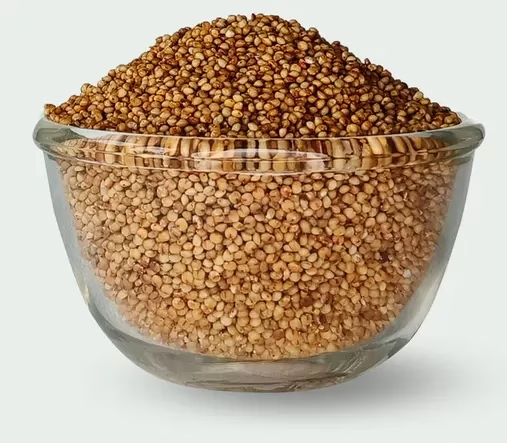
Why Choose Kodo Millet?
Learn Once Benefit for Life
Kodo Millet has been part of traditional diets for generations, valued for its grain structure, fibre distribution, and culinary adaptability.
Watch
Read
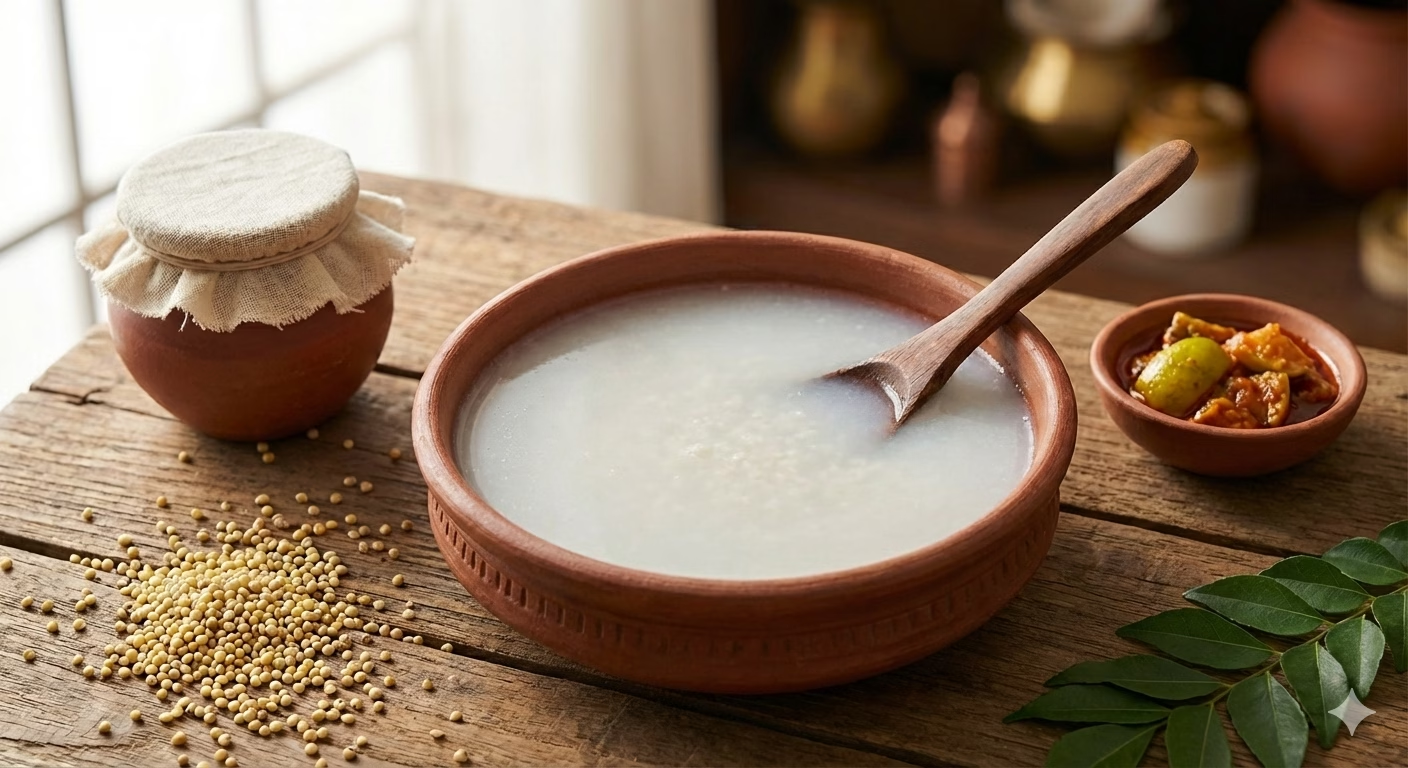



How to Use & Cook
Rinse and soak Kodo millet for 8 hours. Use 1 cup millet to 3 cups water and do not discard the soaking water. Cook in an earthen pot (preferred) or 304-grade stainless steel—avoid pressure cookers they destroy nutrition.
Bring the soaked millet and water to a boil, add 1 tsp bull-driven ghani oil or desi cow ghee, and cook on a low flame with the lid partially covered until water is absorbed. Switch off, cover fully, and rest for 10 minutes before serving.
Usage
For optimal balance, consume Kodo millet for 2 days as part of a rotation with other Siridhanya millets.
Cooking Videos
Important Usage Notes
About this Product
Commonly known as Arikalu or Varagu, Kodo Millet has been a cornerstone of Indian dryland agriculture for millennia. Our Buchhi dehusked version is uniquely “unpolished,” meaning the lignans found in the bran stay exactly where they belong—on your plate. This process results in far fewer broken grains (grits) and a much higher nutritional density than factory-milled alternatives.
Choosing Kodo Millet means supporting a food system that values your health and the planet’s resources. Requiring significantly less water than paddy rice, this hardy grain is a powerhouse of iron, calcium, and minerals.
Traditional Context
In traditional Indian systems, Kodo Millet is revered as a “cooling” grain. It has been historically used in decoctions and porridges to soothe the system
Nutritional Nature
Kodo Millet is naturally high in dietary fibre and contains carbohydrates, plant protein, and minerals as part of its whole-grain composition.
FAQs
Please note that the views and information presented on external websites are those of the respective authors and do not necessarily reflect the views of Roodi Food.
Detailed Description
Buchhi Dehusked – What You Get
Our Positive Millets are Buchhi dehusked, a gentle traditional method revived by Dr. Khadar Vali and Smt. Mahebunni (Buchhi). Unlike industrial milling, this process focuses on preserving the grain rather than polishing it.
What this means for you:
-
✔ Truly unpolished millet – no artificial shine, no aggressive polishing
-
✔ Natural fiber layers intact – supports slow digestion and steady energy release
-
✔ Plumule (germ) preserved – the grain remains whole and structurally complete
-
✔ Minimal breakage – very low grits compared to factory-milled millets
-
✔ No heat or chemical treatment during dehusking
-
✔ Clean, honest processing closer to the millet’s natural form
Because Buchhi dehusking is a low-impact process, these millets require proper soaking before cooking, which helps improve digestibility and cooking quality.
Recognizing Kodo Millet
-
Grain Appearance: Small, round, and slightly pale yellow or light brown
-
Taste Profile: Mild, earthy, and slightly nutty
-
Cooks Similar To: Rice or broken rice—ideal for porridge, upma, or idlis


