
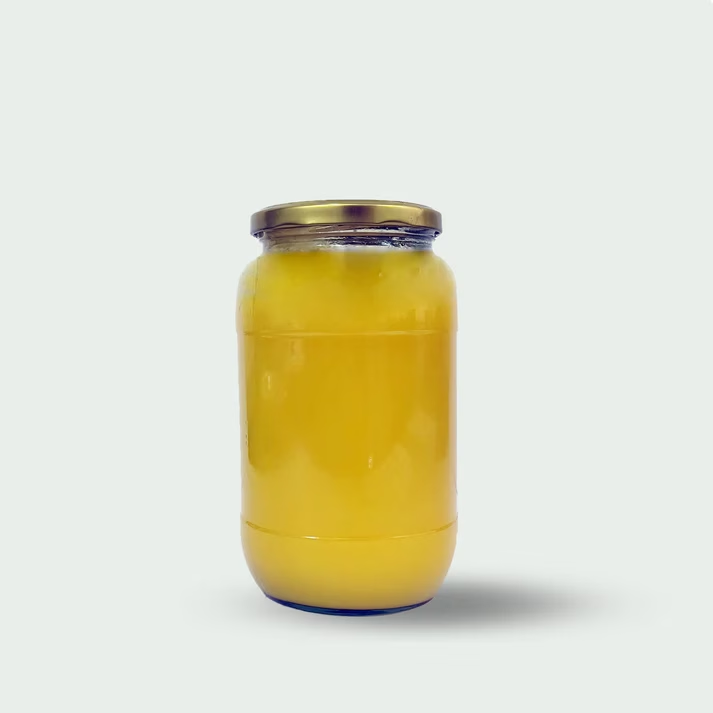
Understanding Traditional A2 Ghee
Learn Once Benefit for Life
Unlike industrial ghee, bilona ghee respects time, temperature, and traditional wisdom to create depth of aroma and texture.
Watch
Read

How to Use & Cook
Ideal for sautéing, frying, tempering, sweets, and daily meals. Can also be used for traditional rituals and festive cooking.
Usage
Can be used daily as part of regular cooking.
Cooking Videos
Important Usage Notes
About this Product
Roodi Food Pure A2 Bilona Ghee is prepared using the traditional bilona method that has been followed in Indian households for centuries. Milk from indigenous desi cows is first cultured into curd, then hand-churned to extract butter, which is slowly simmered into ghee.
This slow and mindful process preserves the natural aroma, grainy texture, and character of authentic ghee—without shortcuts, additives, or industrial processing.
Traditional Context
Bilona ghee has been an essential part of Indian kitchens, rituals, and traditional cooking for generations. It was valued not just as a cooking fat, but as a sacred food prepared with patience and care.
Nutritional Nature
Ghee naturally contains fat-soluble vitamins and stable fats that make it suitable for high-heat cooking.
FAQs
Please note that the views and information presented on external websites are those of the respective authors and do not necessarily reflect the views of Roodi Food.
Detailed Description
Nourishment the Traditional Way
Our Pure A2 Ghee is crafted in the ancient bilona method using milk from indigenous cows. Every spoon carries the rich golden color, nutty aroma, and wholesome nutrition of true ghee — made slowly, with care, as it has been for centuries.
🌿 Why Choose Roodi Food UNCOMPROMISED Ghee?
How uncompromised?
-
Prepared from indigenous desi cows’ milk (A2 protein)
-
Bilona method – milk → curd → hand-churned butter → slow-cooked ghee
-
100% natural – no preservatives, chemicals, or shortcuts
- No cream shortcuts – curd is set first, then churned
- Rich in vitamins (A, D, E, K), good fats, and antioxidants
-
Grainy texture & nutty aroma — hallmark of authentic ghee
-
Traditional, sattvic, and deeply nourishing
- Slow-cooked over fire, preserving aroma & nutrition
-
No preservatives, no additives
Indigenous cows
-
Gir – Origin: Gujarat; high milk yield; docile; famous for A2 milk.
-
Ongole – Origin: Andhra Pradesh; powerful draught breed; used in crossbreeding worldwide.
- Hallikar – Origin: Karnataka; known for draught power; ancestral line for Amrit Mahal.
-
Amrit Mahal – Origin: Karnataka; strong draught breed; long-distance endurance.
-
Vechur – Origin: Kerala; world’s smallest cow; highly medicinal milk.
-
Kasargod Dwarf – Origin: Kerala; hardy dwarf breed; nutrient-dense milk.
-
Malnad Gidda – Origin: Karnataka’s Western Ghats; small size; survives on forest grazing.
-
Pulikulam – Origin: Tamil Nadu; hardy; used in traditional Jallikattu.
-
Umblachery – Origin: Tamil Nadu; compact build; dual-purpose.
🪔 The Bilona Method – Ancient Wisdom Preserved
The bilona method is the Vedic way of making ghee:
-
Fresh cow’s milk is boiled and cooled.
-
Natural culture is added to set thick curd overnight.
-
Curd is churned with a wooden bilona, yielding makkhan (butter) and probiotic-rich buttermilk.
-
The butter is slowly simmered until it turns into golden, aromatic ghee.
Why it matters:
-
Preserves nutrients & probiotic goodness
-
Grainy, aromatic texture (authentic sign of purity)
-
Gentle on digestion, wholesome, and sattvic
-
Produces three useful foods: ghee, buttermilk, whey — a zero-waste process
⚖️ Bilona Ghee vs Industrial Ghee
Most ghee available today is made by directly heating cream in large machines. While efficient, this process sacrifices depth of flavor and much of the natural goodness.
| Aspect | Bilona Ghee (Traditional) | Industrial/Factory Ghee |
|---|---|---|
| Base | Curd → Butter → Ghee | Cream directly heated |
| Process | Hand-churned, slow-cooked | High-speed, high heat |
| Yield | Low (25–30L milk → 1L ghee) | High yield |
| Texture & Aroma | Grainy, nutty, aromatic | Smooth, flat, less aroma |
| Nutrition | Retains probiotics, vitamins, antioxidants | Many nutrients lost |
| Digestibility | Lighter, easier on stomach | Heavier, may cause bloating |
Bilona is slower, but it creates authentic ghee that is truly nourishing.
🧬 A2 vs A1 — The Key Difference (Compact)
-
Indigenous cows naturally produce A2 beta-casein protein milk.
-
A2 milk is considered easier to digest compared to A1 milk (from European breeds).
-
The difference is just one amino acid, but it affects digestion — A1 may release BCM-7, while A2 does not.
-
In simple words: A2 ghee is gentler on the stomach and aligns with traditional wisdom.
🌸 Health & Nutritional Value
-
Fat-soluble vitamins (A, D, E, K) that support overall health
-
Healthy fatty acids like CLA (conjugated linoleic acid)
-
High smoke point – one of the safest oils for cooking
-
Mentioned in Ayurveda as a sattvic food that nourishes body, mind, and spirit
🍲 Usage & Cooking
-
Add a spoonful to hot rice, dal, or rotis
-
Cook or fry with ghee (doesn’t oxidize easily)
-
Essential for traditional sweets and rituals
-
Ayurveda recommends ghee for digestion, immunity, and mental clarity
-
Can also be used externally — for massage, skin, and hair care
🔍 Recognising Authentic Ghee
-
Grainy texture (solidifies into granules, not flat wax)
-
Golden yellow color
-
Nutty, rich aroma
-
Melts easily, with no oily residue
⚖️ Important Instructions
-
Store in a cool, dry place away from direct sunlight
-
Always use a clean, dry spoon
-
No refrigeration required
-
Shelf life: ______ months (as per packaging)
🌟 Did You Know?
-
1 litre of Bilona ghee requires 25–30 litres of cow’s milk
-
Ghee is called “Amritam” in Ayurveda — symbol of vitality and longevity
-
Unlike refined oils, ghee retains natural antioxidants and nutrients
❓ Frequently Asked Questions
Q: What is Bilona Ghee?
A: Ghee made by converting milk to curd, churning into butter, then slow-heating into ghee.
Q: Why choose A2 ghee?
A: A2 milk (from indigenous cows) is naturally easier to digest than A1 milk varieties.
Q: Does it need refrigeration?
A: No, store in a cool, dry place in an airtight container.
Q: How long does it last?
A: Pure ghee stays good for many months without refrigeration if stored properly.

