
The Paradox of Quality: Why We Punish Excellence and Reward Mediocrity
A pattern observed through food, but reflected across society
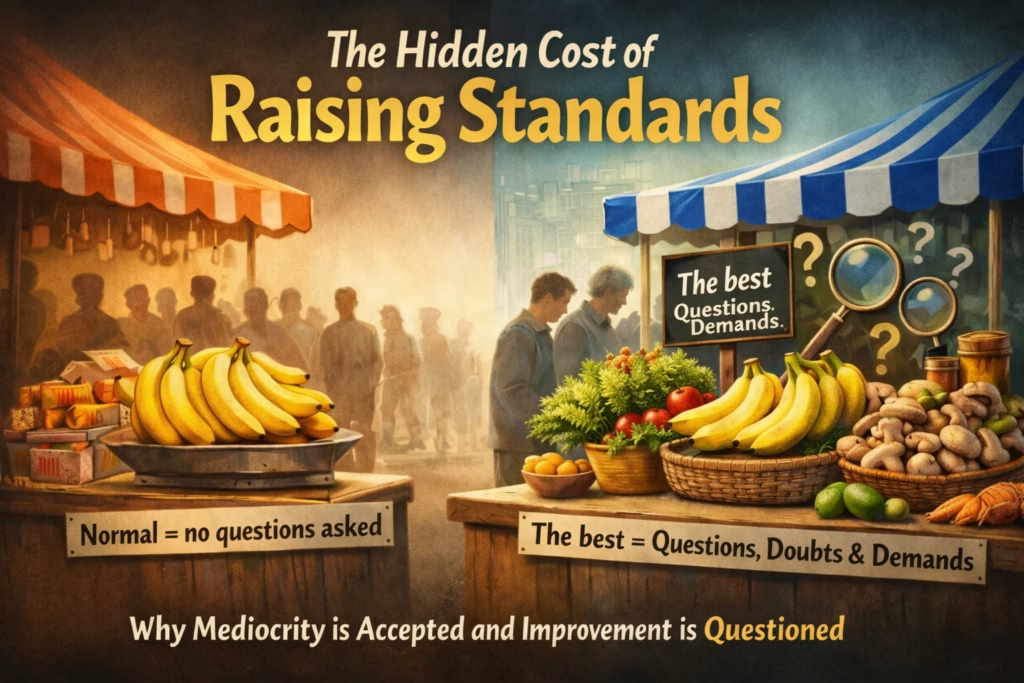
There is a curious glitch in our collective human software. It doesn’t show up in market research, but it reveals itself quietly at the checkout counter, in the questions we ask, and the skeptical eyebrow we raise at a price tag.
After years of working with farmers and families, we’ve noticed a pattern: When standards are low, we ask nothing. When standards rise, we suddenly become forensic investigators.
1. The Invisibility of the Ordinary
Most of us consume “ordinary” food daily without a second thought. We don’t ask which chemicals kissed our spinach or how many hands (and miles) it took to get that refined wheat to our plate. We buy it, eat it, and move on.
The familiar requires no explanation. Mediocrity is like background noise—we’ve lived with it so long we’ve forgotten it’s there. But the moment something better appears? We reach for our magnifying glasses.
2. The Mental Shift: The ₹10 Interrogation
Recently, we introduced a unique heirloom banana. Grown without chemicals, naturally ripened, and preserved for generations. It cost just ₹10 more than the standard, artificially yellowed supermarket version.
Suddenly, the interrogation began: “Is it really better? Why is it shaped like that? Is this just marketing?”
It’s fascinating: we never question the “ordinary” banana that was gassed into ripeness, but we demand a 10-page thesis for the one grown the way nature intended. We allow evaluation to replace experience before we’ve even taken a bite.
3. Case Studies in Our “Hypocrisy Hunt”
We’ve noticed that once this pattern takes hold, it shows up everywhere. We treat excellence like a suspect in a courtroom while mediocrity gets a VIP pass.
-
The Organic Store Dilemma: We walk into a conventional supermarket—full of ingredients we can’t pronounce—and trust is automatic. We walk into an organic store with transparent supply chains, and suddenly every price tag needs a justification. We demand 100% transparency from the sincere, while granting 100% opacity to the mediocre.
-
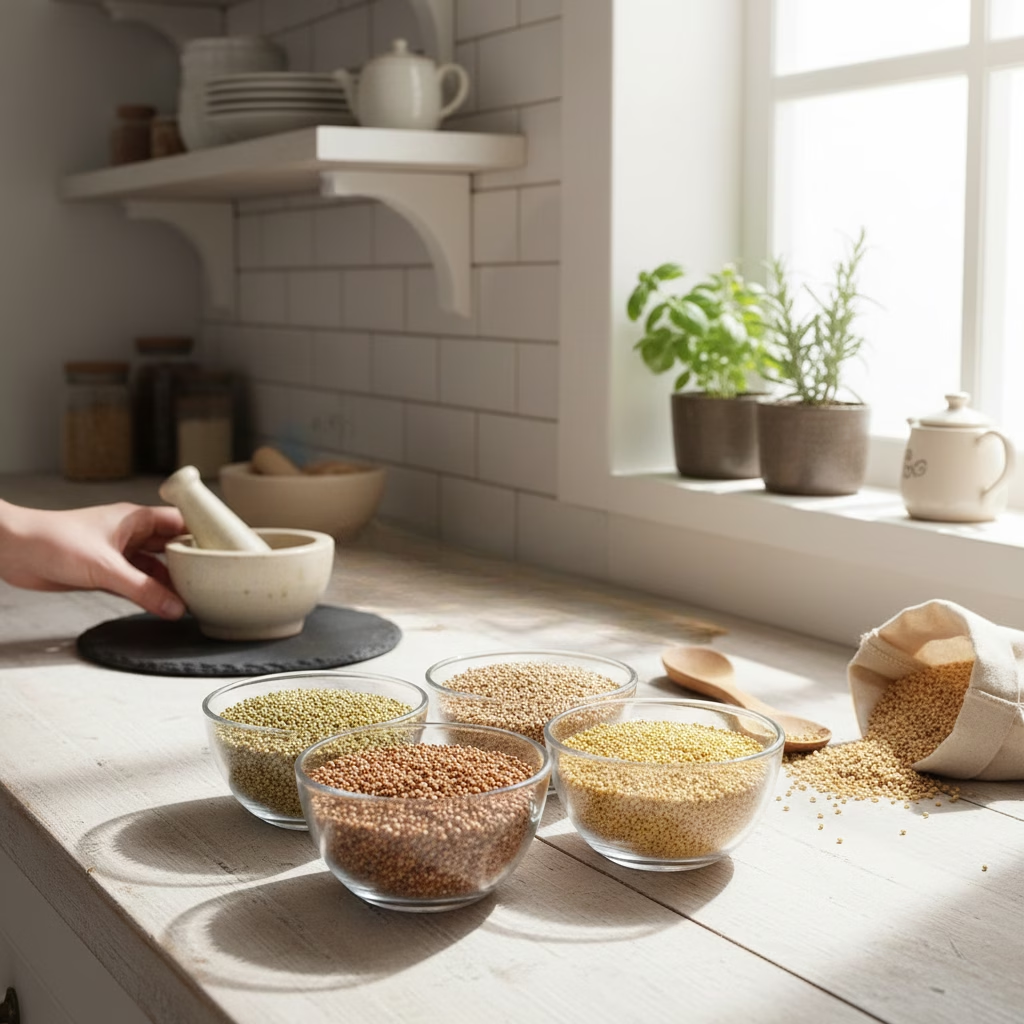
The Mushroom & Millet Trial: We buy industrial button mushrooms, the rice without a glance. But show us a forest-grown variety or a 7-layer intact millet, and we suddenly become nutritional scientists. Foods that sustained civilizations for millennia are asked to “prove” themselves, while nutritionally depleted grains are accepted as “normal” just because they’re white and fluffy.
-
The Health-Conscious Paradox: We’ve noticed that those who care most about health are often the hardest to serve. As one strict health based restaurateur told us, the “aware” audience scrutinizes strictly healthy menus into exhaustion, while the audience that do not care about nutrition go for unhealthy and cheap. We’ve made it so hard for healthy businesses to exist that it’s almost easier, safer and profitable to just sell junk.
4. Why Is Our Brain Like This?
This isn’t because we are “bad” people. It’s because our brains have some old, dusty wiring:
-
Status Quo Bias: Familiarity feels like safety. Even if the “familiar” is making us sick, our brain whispers, “At least we know this poison.”
-
The Moral Credibility Penalty: If a business claims to be “good,” we hunt for one mistake to call them a hypocrite. If they make no moral claims, we don’t hold them to any standards at all.
-
Loss Aversion: We feel the “loss” of an extra ₹10 today much more than the “gain” of avoiding a ₹10,000 hospital bill later.
5. From Groceries to Governance
This pattern follows us to the ballot box. We often give “mediocre” leaders a free pass with a shrug—“Well, nobody’s perfect.” But the moment an honest, competent person attempts to lead, we demand 100% perfection. We magnify their smallest missteps until they are disqualified, while the deeply flawed coast on our acceptance. Democracies erode because we make it impossible for the sincere to survive and the insincere thrive.
6. The Scrutiny Swap: A Better Way to Question
We don’t need to stop being skeptical; we just need to be fairly skeptical. Next time you’re about to grill a small, ethical business, try asking those same questions of the “ordinary” giants:
| Instead of asking… | Try asking the “Ordinary” option… |
| “Why is this millet ₹20 more?” | “What was stripped from this rice to make it so cheap?” |
| “Is this organic store 100% perfect?” | “What exactly is in the ‘natural flavors’ of this soda?” |
| “Is this new leader 100% consistent?” | “Why am I okay with the 100% corruption of the status quo?” |
7. The Reward: What Happens When We Shift?
When we stop punishing excellence and start supporting the sincere, something beautiful happens. It’s not just about a “better product”—it’s about a healthier world.
-
Our Health Recovers: When we stop scrutinizing millets and start eating them, our bodies stop fighting “empty calories” and start thriving on real fiber and minerals. We trade “fortified” chemicals for genuine vitality.
-
Farmers Breathe Again: When a farmer knows we value their heirloom seeds over “perfect-looking” industrial crops, they stop using pesticides and start focusing on flavor and nutrition. We preserve biodiversity, one meal at a time.
-
Ethical Businesses Bloom: When we give sincere entrepreneurs the room to be human (and not perfect), they have the energy to innovate. The “Organic Movement” stops being a struggle and starts being the new “Normal.”
-
Integrity Becomes Viable: Whether in food or in leadership, when we reward intent and direction rather than demanding impossible perfection, more honest people step up to serve.
8. Supporting What Deserves to Grow
When a farmer, a store owner, or a leader tries to raise the bar, they don’t need us to be their judge; they need us to be their partner.
The question isn’t, “Are they perfect?” The question is, “Are they moving in the right direction?” Every time we choose the “better” option—even if it requires a little more patience or a few extra rupees—we are voting for a world where excellence is the standard, not the exception.
Familiar failure should never be more comfortable than unfamiliar effort.
Let’s choose consciously. Let’s choose wisely.
Does this resonate with you? We’d love to hear about a time you caught yourself being “extra tough” on a healthy choice. Let’s learn to patch our collective software together in the comments!
Disclaimer: This article presents observations on consumer behavior patterns based on lived experience working with farmers, customers, and the healthy food industry. The psychological concepts referenced are well-documented in behavioral science literature and applied here to real-world observations. The views on political and social patterns are presented as general observations, not endorsements of any specific party, candidate, or ideology. This article is intended to encourage thoughtful reflection on decision-making patterns, not to provide professional psychological, political, or investment advice.





Leave A Comment