
Why the Buchhi Method is the Ultimate Standard for Positive Millets
“The Most Nutritious, Unpolished Grains on the Planet.”

In the modern quest for health, we have looked toward superfoods from every corner of the globe. Yet, the most potent solution for metabolic wellness lies in our ancient “Positive Millets” (Siridhanya). However, there is a catch: A millet is only as good as the way it is processed.
If you are eating “unpolished” millets processed in high-speed industrial factories, you may be missing out on the very important benefits you seek. Here is a deep dive into the Buchhi Method—the gold standard of millet processing—and why it is the only way to truly unlock the “Life Force” of these grains.
1. Beyond “Unpolished”: Understanding the 7 Layers
Most commercial millets are processed using “impact hullers” or high-friction rollers. These machines are designed for speed, not nutrition. In the process, they often strip away multiple layers of the grain to ensure a long shelf life and a “clean” look.
The Buchhi Method is a Cold-Processing technique. Using a domestic mixer on “pulse” mode or a modified small-scale stone mill, it carefully removes only the outermost husk (the glume).
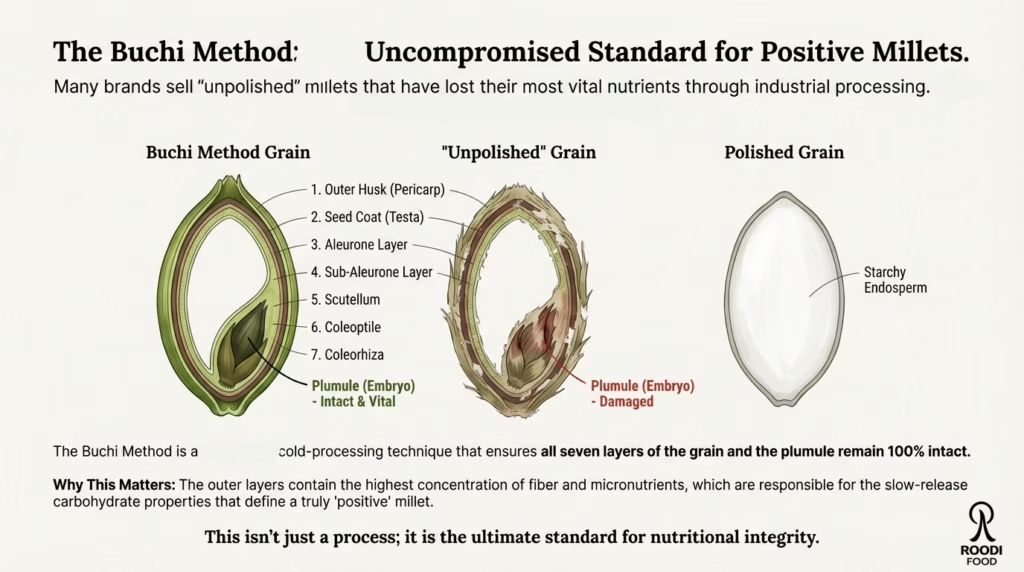
By preserving all seven layers of the grain's bran, the Buchhi Method ensures:
-
The Conservation of Lignans: These are phytonutrients found in the outer layers that act as powerful antioxidants.
-
Structural Integrity: The grain remains a "whole" biological unit.
2. The Plumule: The Vital "Heart" of the Grain
The most significant difference in the Buchhi Method is the preservation of the Plumule. The plumule is the embryo—the part of the seed that sprouts.
In industrial milling, the heat generated by friction and the mechanical impact usually dislodges or "kills" the plumule.
-
The Buchhi Difference: Because it is a cold, low-RPM process, the plumule remains intact.
-
Nutritional Impact: The plumule is the densest source of Vitamin B-complex and essential fatty acids. When you eat Buchhi-method millets, you are consuming a "living" grain capable of biological activity, which the body recognizes and absorbs more efficiently.
3. The Mathematics of Healing: The Single-Digit Ratio
Health, according to the principles of Siridhanya, is a little bit matter of mathematics. Specifically, the ratio of Carbohydrates to Dietary Fiber.
For a grain to be considered "Positive" (curative), it must have a Fiber-to-Carb ratio below 10.
Take Browntop Millet as an example:
-
Carbohydrates: ~65g
-
Fiber: ~12.5g
-
Ratio: 65 divided by 12.5 = 5.2
Because the Buchhi Method ensures zero fiber loss, this single-digit ratio is maintained. This ensures that glucose is released into your bloodstream slowly over a period of 5 to 7 hours, providing a steady stream of energy and preventing the insulin spikes associated with rice and wheat.
4. Efficiency in Every Grain: lower Grit vs Wastage
Industrial milling is notoriously wasteful. To get a "clean" looking grain, big machines break upto ~20% of the millet into small pieces called "grits"
The Buchhi Method is an act of precision. By using the "pulse" technique:
-
Whole Grain Yield: You get 97-98% whole grains.
-
Minimal Grits: Only 2-3% of the grain is broken.
-
Economic Value: For the consumer, this means you are paying for whole, nutrient-dense food.
5. The Foundation: Jungle Krishi (Forest Farming)
The Buchhi Method is also the final step in a journey that begins with Jungle Krishi. This is the most honest form of agriculture:
-
Zero Input: No synthetic fertilizers (Urea/DAP) or pesticides.
-
Microbial Wealth: The soil is enriched by the natural decomposition of diverse forest matter.
-
Rain-Fed Resilience: These millets are grown using only natural rainfall. This stress makes the plant "hardy," forcing it to pull more minerals (Iron, Calcium, Magnesium) from deep within the earth compared to pampered, irrigated crops. And many other natural advantages
6. How to Identify Authentic Buchhi-Method Millets
If you are buying millets, look for these three markers of the Buchhi Method:
-
Dull Appearance: They should not be shiny or translucent. A matte finish indicates the bran is intact.
-
The Soaking Test: When you soak Buchhi millets, the water will often turn a pale yellow or light brown. These are the natural pigments (antioxidants) and are a sign of purity.
-
Cooking Time: Because the fiber is 100% intact, these millets require a minimum of 8 hours of soaking to allow the fiber to soften and become bioavailable.
Conclusion: A Return to Integrity
The Buchhi Method isn't just a way of processing food; it is a way of respecting life. By decentralizing production back to the villages and using methods that prioritize the plumule and fiber, we move away from "artificial life" toward Siri Jeevanam—the prosperous, healthy life we were meant to live.
Siri Jeevanam is the lifestyle and health philosophy promoted by Dr. Khadarvalli often called the "Millet Man of India"
Choose Buchhi-Method Siridhanya. Choose the integrity of nature.
FSSAI Compliance & Consumer Guidance
-
Storage: Because these grains contain the intact plumule and natural oils, store them in a cool, dry place or airtight glass containers to maintain freshness.
-
Disclaimer: This product is a nutrient-dense whole food. It is intended to support a healthy lifestyle and is not a substitute for professional medical advice or treatment.
Frequently Asked Questions (FAQs)
1. What exactly is “Jungle Krishi,” and why is it better?
Jungle Krishi, or Forest Farming, is a method where millets are grown without any external inputs—no chemical fertilizers, no pesticides, and often no irrigation. The plants grow in a natural, biodiverse ecosystem. This “hardship” makes the grain more resilient and increases its mineral density compared to crops grown with synthetic boosters.
2. Why is the “Plumule” so important?
The plumule is the embryo or the “heart” of the grain. It contains the essential fatty acids and the highest concentration of B-vitamins. In industrial milling, the heat and friction usually destroy or remove the plumule. The Buchhi method ensures it stays intact, giving you a “living grain” that is nutritionally complete.
3. Does a lower “Grit Percentage” mean better quality?
Yes. When millets are processed harshly, the grain breaks into small pieces (grits). High-speed machines produce up to 20% grits. This means you are paying for broken fragments that cook unevenly. The Buchhi Method’s 2-3% grit rate means you get nearly 98% whole, perfect grains.
4. Why do I have to soak Buchhi Method millets for 8 hours?
Since the Buchhi Method preserves all seven layers of tough cellulose fiber, the grain needs time to absorb water. Soaking “activates” the grain and softens the fiber, making it easy for your stomach to digest and ensuring the slow release of glucose into your blood.
5. Are these millets “Organic”?
While “Organic” is a legal certification, Jungle Krishi goes a step further. It is “beyond organic” because it involves zero-input farming in a natural forest-like environment. Our millets are FSSAI compliant and processed with the highest standards of purity.
6. Can I use these millets to replace Rice and Wheat?
Absolutely. In fact, that is the goal of Siri Jeevanam. Because of the Single-Digit Carb-to-Fiber ratio (below 10), these millets provide more sustained energy and better digestive support than refined white rice or processed wheat.
Pro-Tip for the Reader:
When you receive your Buchhi Method millets, notice the color and texture. They won’t be “pretty” or shiny like polished rice. That dullness is the sign of true health—it’s the color of the bran and the lignans that your body craves!
Disclaimer
This article presents ecological, cultural, nutritional, and philosophical perspectives on food choices for public awareness and discussion. It does not diagnose, treat, cure, or prevent any disease, nor does it provide medical advice. Individual dietary needs vary based on health status, age, lifestyle, and other factors. For personalized nutrition or health guidance, please consult a qualified healthcare or nutrition professional, in accordance with FSSAI recommendations and guidelines.
Data Sources: Information compiled from agricultural research, nutritional databases, environmental studies, and historical sources. Specific figures represent approximate ranges; readers are encouraged to verify independently.
Attribution: This article references work by various researchers including Dr. Khadar Vali and others advocating for millet revival. Mention does not constitute medical endorsement or claims about disease treatment.








Leave A Comment