
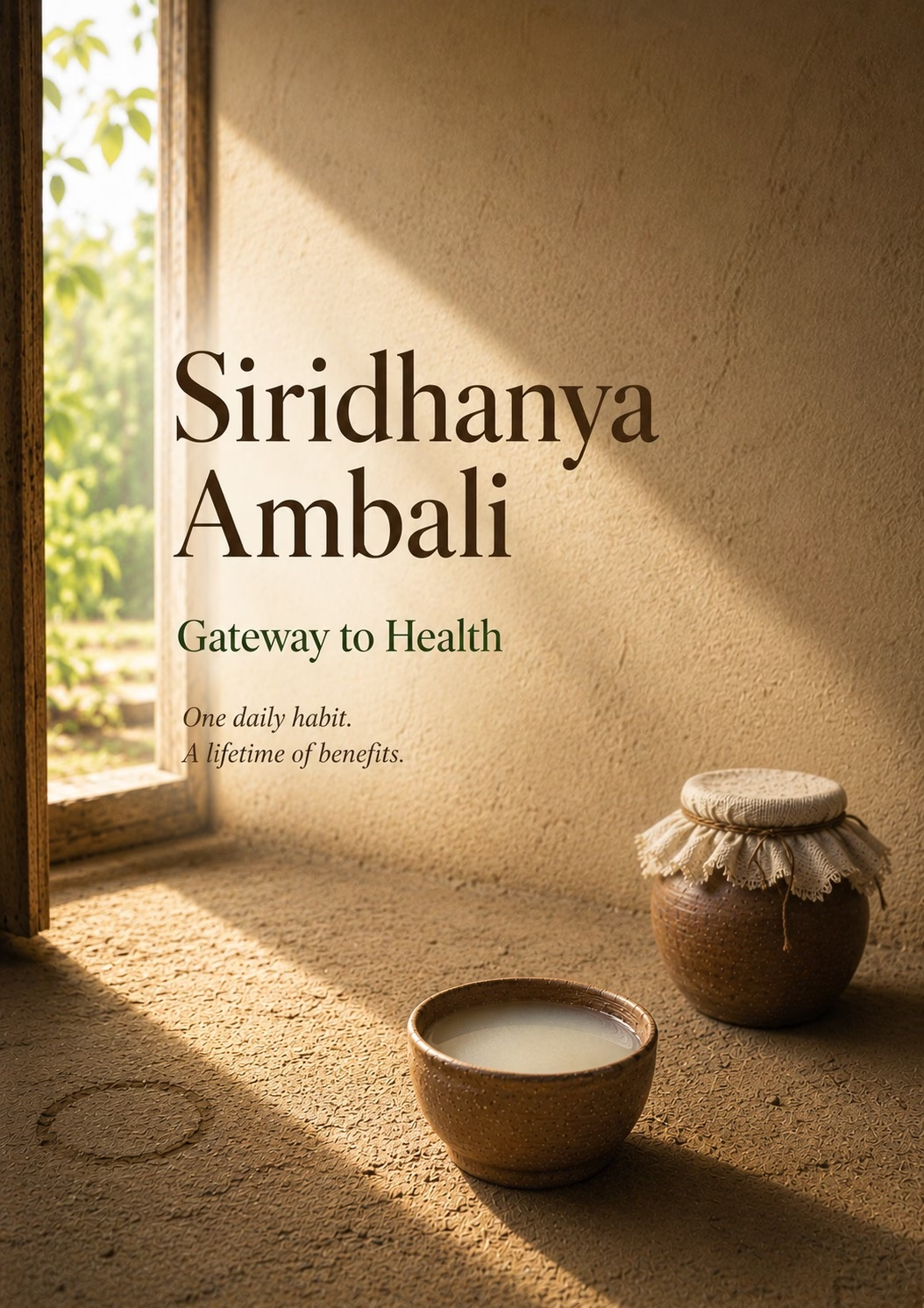
Siridhanya Ambali : The Gateway to Health
A Gift to Humanity
In Gratitude
With deep respect and gratitude to Dr. Khadar Vali & Dr. Sarala, whose teachings and scientific acumen invite us to look deeper into food, nature, and human health.
We share this exploration of Siridhanya Ambali as a humble acknowledgment of the knowledge they has shared and its potential to benefit humanity.
May this gift continue towards healthier people, a healthier society, and a healthier planet.
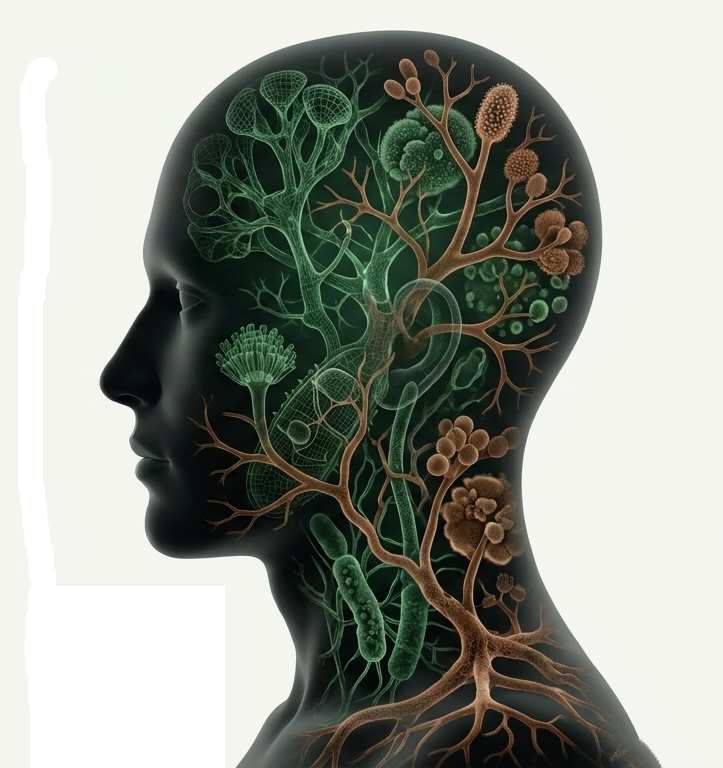
Imagine a Forest Inside You
Imagine a forest with trillions of forms of life.
Now imagine that forest inside you.
In your gut lives a vast community of microorganisms — bacteria, archaea, fungi and other microscopic life.
You cannot see them.
But they are alive.
And they are not separate from us.
They live with our cells, interact with our immune system, transform what we eat and produce substances that can influence our biology.
The body and its microbial community constantly interact with and respond to one another.
This is an ancient relationship.
A living alliance.
A forest inside the human body.
The Ancient Alliance
Our relationship with microbes began long before humans existed.
Human beings evolved together with microorganisms.
They became part of our biology so deeply that the boundary between “us” and “them” is not as clear as it first appears.
The gut microbiome participates in digestion, metabolism, immune development and communication between the gut and the brain.
Microorganisms can transform substances that human enzymes cannot fully process.
They produce metabolites.
They interact with the intestinal lining.
They communicate with immune cells.
They respond to what we eat.
And our body responds to them.
The human body is therefore not an isolated organism.
It is a community.
The Microbes That Helped Make us Human
The gut microbiome was not simply something humans acquired after becoming human.
It was part of the evolutionary environment in which humans developed.
As our ancestors changed their diets, microorganisms helped extract energy from foods that human digestive enzymes could not completely break down.
The fermentation of dietary fibre produces short-chain fatty acids and other metabolites that can contribute to human energy metabolism.
The relationship between diet, the gut, microbial metabolism and the body’s energy economy became increasingly important as human evolution produced a larger and more energy-demanding brain.
Microbes also became deeply involved in the development and regulation of the immune system.
The immune system had to learn to live with enormous populations of microorganisms while distinguishing harmless organisms and food-derived substances from genuine threats.
The gut therefore became not merely a digestive organ, but one of the great interfaces between the human body and the microbial world.
And the relationship extends to the brain.
The gut microbiome communicates with the nervous system through microbial metabolites, immune pathways and neural signalling.
The human brain did not evolve in isolation from the microbial world.
Microbes were not merely passengers in human evolution. They were part of the biological environment in which we became human.
This does not mean that microbes alone made humans successful.
Human evolution is the result of many interacting forces.
But the microbial partnership was a significant one of them.
And it remains with us.
One of The Greatest Gift to a Child
This relationship begins early in life.
A child’s microbial ecosystem develops rapidly during the early years and interacts with the developing immune system, metabolism and nervous system.
The foundations laid during childhood can therefore matter far beyond digestion.
A healthy and diverse gut microbiome may be one of the greatest biological gifts we can give a child.
We are not only feeding a child.
We are helping create the environment in which another human being develops.
For that reason, the microbial health of children deserves particular attention.
Why Siridhanya Ambali?
If the gut microbiome is one of the foundations of human health, then maintaining its diversity matters.
This is where Siridhanya Ambali becomes important.
Siridhanya Ambali is a fermented preparation made from the Five Positive Millets using the method taught within the Siri Jeevanam tradition.
Its purpose is not simply to provide another way of eating millet.
One of its most distinctive features is microbial diversity.
According to Dr. Khadar Vali, Siridhanya Ambali can provide approximately 16,000–18,000 varieties of microorganisms.
The significance is not simply the number.
It is the diversity.
Different microorganisms have different capabilities and relationships with one another.
Ambali also provides the fermented millet itself, together with nutrients, fibre and metabolites produced during fermentation.
So two things come together:
microbial diversity
and
the nourishment of the microbial ecosystem.
The gut is one of the foundations of health.
Siridhanya Ambali is intended to strengthen that foundation.
Siridhanya Ambali
There are many traditional preparations known as Ambali.
In this book, Siridhanya Ambali specifically means the fermented preparation made from the Five Positive Millets.
The Five Positive Millets are:
- Foxtail Millet
- Kodo Millet
- Little Millet
- Barnyard Millet
- Browntop Millet
The preparation is simple:
One millet.
Soaked.
Boiled.
Cooled.
Fermented.
Drunk as a thin liquid.
The method matters.
Preparing Siridhanya Ambali
(For Two People)
Ingredients
- 500 ml structured water
- 5 g millet rava/grain
- One of the Five Positive Millets should be
used. - Bucchi/dehusked millet is preferred over
machine-dehusked unpolished millet. - Polished millet is not preferred.
- One of the Five Positive Millets should be
Preparation
- Soak
- Place 5 g millet Rava or Grain in 500 ml water.
- Soak for 8–10 hours.
- Boil
- Boil the soaked millet together with the soaking water.
- Use only millet and water.
- Do not add salt or anything else.
- Boil for exactly 10 minutes.
The preparation should remain thin and liquid.
- Cool
- Allow it to cool completely.
- Do not begin fermentation while it is hot.
- Ferment
- Transfer the cooled preparation to a clean mud pot.
- A mud pot is mandatory within the method.
- Cover the mouth with a clean cotton cloth.
- Do not seal it with a lid.
- Allow it to ferment for approximately the time required for milk to turn into curd
- About 8 hours in summer.
- About 10 hours in winter.
Temperature affects fermentation.
- Check
- If the Ambali develops bubbles or a sour smell, discard it.
Do not drink it.
- If the Ambali develops bubbles or a sour smell, discard it.
- Drink
- Mix the preparation so that the settled millet is distributed through the liquid.
- Drink the complete preparation.
- It should remain thin and liquid.
- Drink it on an empty stomach.
- Salt may be added immediately before drinking if desired, but the preferred practice is without salt.
Do not reheat fermented Ambali.
For detailed demonstrations and authentic guidance on millet practices and best health guidelines, we highly recommend the Millet Magic YouTube Channel.
Here is the latest Videos on Ambali
WHY IS AMBALI THIN?
Siridhanya Ambali is deliberately prepared as a thin drink.
Stomach acid can destroy many microorganisms.
Thin liquid passes through the stomach more readily than solid food.
Within the Siri Jeevanam framework, consuming thin Ambali on an empty stomach is intended to help the fermented microorganisms reach the intestine with less exposure to the acidic stomach environment.
The method therefore combines:
Thin.
Fermented.
Empty stomach.
STRUCTURED WATER
Water is another important part of the Siri Jeevanam approach.
Within this framework, naturally flowing water is regarded as the ideal example of structured water.
For everyday use, the method involves storing drinkable water in a copper vessel or using a copper plate in a suitable vessel and allowing the water to rest, traditionally for several hours or overnight.
The detailed theory and preparation of structured water are beyond the scope of this article right now. We will publish and article in Future.
For Siridhanya Ambali, the important point is simply:
Structured water is preferred in the preparation.
FERMENTATION
Fermentation is a biological transformation carried out by microorganisms.
The boiled millet is first cooled and then allowed to ferment.
During fermentation, microorganisms interact with the food and with one another.
They transform components of the millet and produce new compounds.
The result is no longer simply boiled millet.
It has become a living fermented preparation.
MICROBIAL DIVERSITY
According to Dr. Khadar Vali, curd contains microorganisms belonging to approximately 2–4 microbial families.
Commercial probiotic products may contain a small number of selected strains.(10 -14)
Dr. Khadar Vali describes Siridhanya Ambali as providing approximately:
16,000–18,000 varieties of microorganisms
The number is remarkable.
But the deeper significance is diversity.
Different microorganisms have different capabilities.
Different millets can also create different microbial environments during fermentation.
Foxtail is not Kodo.
Kodo is not Barnyard.
Each provides its own combination of fibre and other natural compounds.
Different millet.
Different microbial resources.
This is one reason the Five Positive Millets are rotated.
THE FIVE POSITIVE MILLETS
According to Dr. Khadar Vali, the Five Positive Millets occupy a special place because of their characteristic Aromatic Mature Fibre.
They are:
Foxtail
Kodo
Little
Barnyard
Browntop
Their importance in this book is not simply their vitamin or mineral content.
It is their fibre.
It is their natural structure.
And particularly:
Aromatic Mature Fibre.
EVERY MEAL FEEDS MORE THAN JUST US
When we eat, we normally think about feeding ourselves.
But part of our food also becomes nourishment for the microorganisms living inside us.
Different foods provide different fibres.
- Vegetables.
- Tubers.
- Legumes.
- Fruits.
- Seeds.
- Millets.
The Five Positive Millets provide their characteristic Aromatic Mature Fibre.
Different fibres provide different resources to different microorganisms.
So every meal has another destination.
What reaches the Living Forest matters.
AROMATIC MATURE FIBRE
Dr. Khadar Vali considers Aromatic Mature Fibre one of the most significant features of the Five Positive Millets.
Within the Siri Jeevanam framework, it is described as a mature aromatic fibre and identified with lignans.
It is not simply another nutrient.
It is part of the natural architecture of the grain.
Dr. Khadar Vali attributes several important properties to it.
Among them are:
cleansing
and
regulation.
He considers its cleansing properties particularly powerful, including the cleansing of organ systems.
There are further aspects of this understanding, including its relationship with electromagnetic fields.
That subject is beyond the scope of this book and is therefore kept to a minimum.
The regulatory property, however, is central.
THE REGULATORY PROPERTY
According to Dr. Khadar Vali, Aromatic Mature Fibre is physically associated with the carbohydrates and proteins within the Five Positive Millets.
As digestion proceeds, the fibre is acted upon and the associated carbohydrates and proteins become available progressively.
For this reason, he describes them as:
Regulated Carbohydrates
and
Regulated Proteins.
The remarkable feature is therefore not simply that the millet contains carbohydrate, protein and fibre.
It is the relationship between them.
The natural structure of the food matters.
This is why preserving the natural structure of the grain is important within the Siri Jeevanam approach.
SUGARCANE SUGAR
Sugarcane sugar is predominantly glucose and sucrose-derived carbohydrate.
Within the Siri Jeevanam framework, glucose entering the body directly from the mouth is considered undesirable.
Sugarcane Jaggery also is not regarded as a healthy food simply because it is less processed.
Unrefined does not make sugarcane sugar healthy. And it’s harmful for the gut microbiome
PALM JAGGERY
Palm jaggery differs from sugarcane sugar in its composition.
It contains less glucose and a greater proportion of fructose. And has many important nutrients.
For this reason, genuine palm jaggery is preferred over sugarcane sugar.
WHAT DAMAGES THE FOREST?
The microbial ecosystem is shaped by its environment.
The foods and practices that can disrupt it include:
- Sugarcane sugar and sugarcane jaggery
- Rice and wheat when they dominate the diet
- Heavily processed and ultra-processed meals
- Fried foods and repeatedly heated oils
- Artificial sweeteners
- Alcohol
- Unnecessary antibiotics
- Smoking
- Chronic stress
- Sleep deprivation
- Sun deprivation
- Sedentary living
- A diet lacking diversity also reduces the variety of resources available to the microbial ecosystem.
Scientists use the term dysbiosis to describe an altered or disrupted microbial ecosystem.
The principle is simple:
Change the environment and the ecosystem changes.
THE CHEMISTRY OF THE FOREST
The microorganisms inside us do not simply live there.
- They transform.
- They produce.
- They communicate.
When microorganisms ferment fibres and other food components, they produce many metabolites.
Among the best studied are short-chain fatty acids such as:
- acetate
- propionate
- butyrate
Microorganisms also transform bile acids, plant compounds and amino-acid-derived substances.
These metabolites can act within the intestine and participate in communication with tissues elsewhere in the body.
The gut microbiome is therefore not merely a collection of organisms.
It is a living chemical system.
Food → Microbes → Metabolites → Human Biology
THE GUT AND THE BRAIN
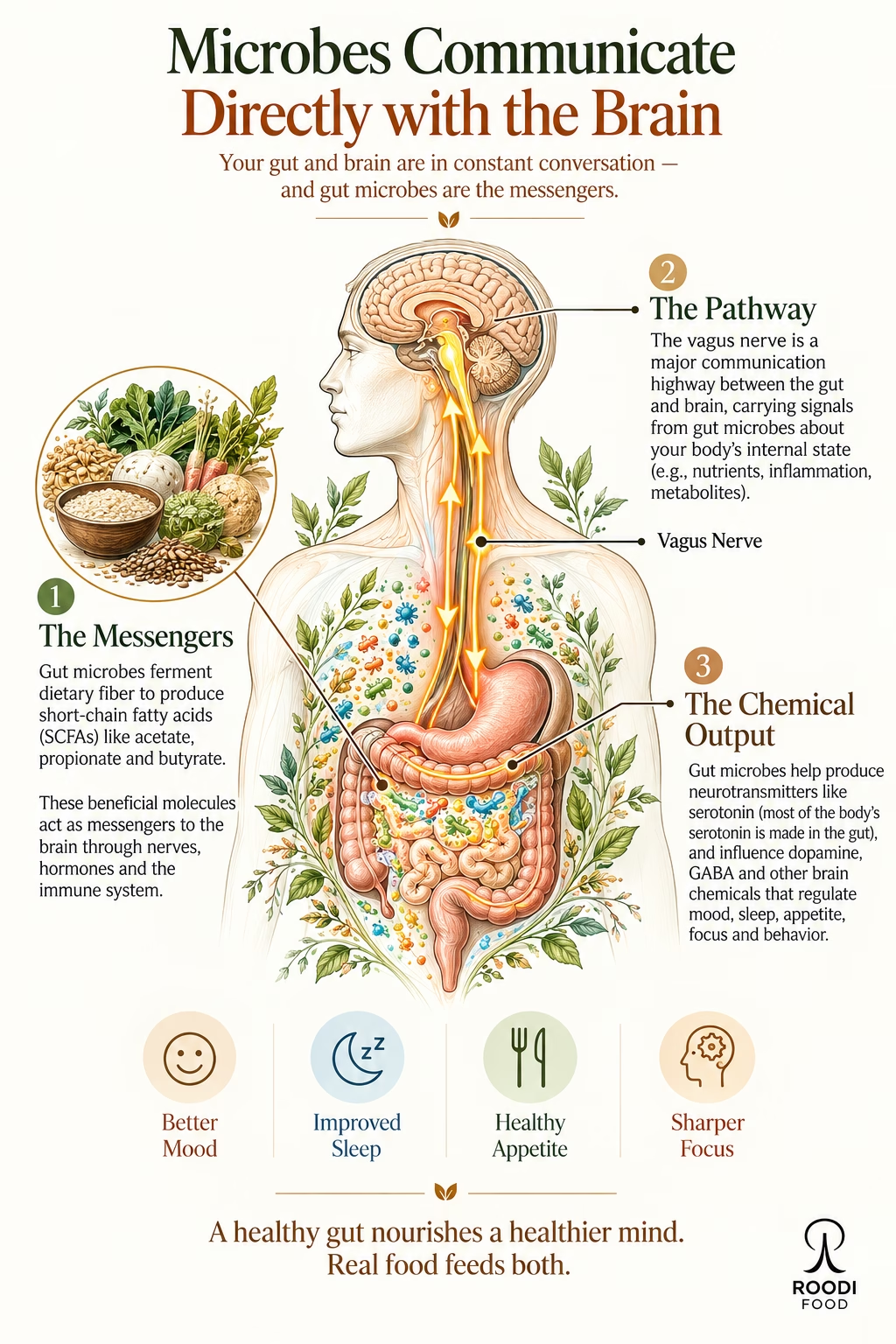
The gut and brain communicate continuously through nerves, immune pathways, hormones and chemical messengers.
This is the gut–brain axis.
The vagus nerve is one important pathway within this system.
The microbial community participates in this larger conversation.
The brain communicates with the gut.
The gut communicates with the brain.
The relationship is complex and still being studied.
But its existence is clear.
The gut is not isolated from the mind.
SEROTONIN
Most of the body’s serotonin is produced in the gastrointestinal tract.
Serotonin participates in mood, sleep, appetite and many other functions.
The gut microbiome can influence biological systems involved in serotonin production and signalling.
This does not mean that gut bacteria simply “make happiness.”
The biology is more complex.
But it does mean that the microbial world inside the gut is connected with systems that matter to the brain.
THE SUN AND THE FOREST
The Living Forest inside us does not exist separately from the natural world.
Sunlight affects the body through several pathways,
Emerging research also suggests that sunlight exposure may influence the gut microbiome, including microbial diversity, through interactions involving the skin, immune system and circadian biology.
The field is still developing.
But the relationship is intriguing:
The Living Forest inside us is not separate from the world around us. It is part of the same living system.
FOOD BUILDS SOCIETY
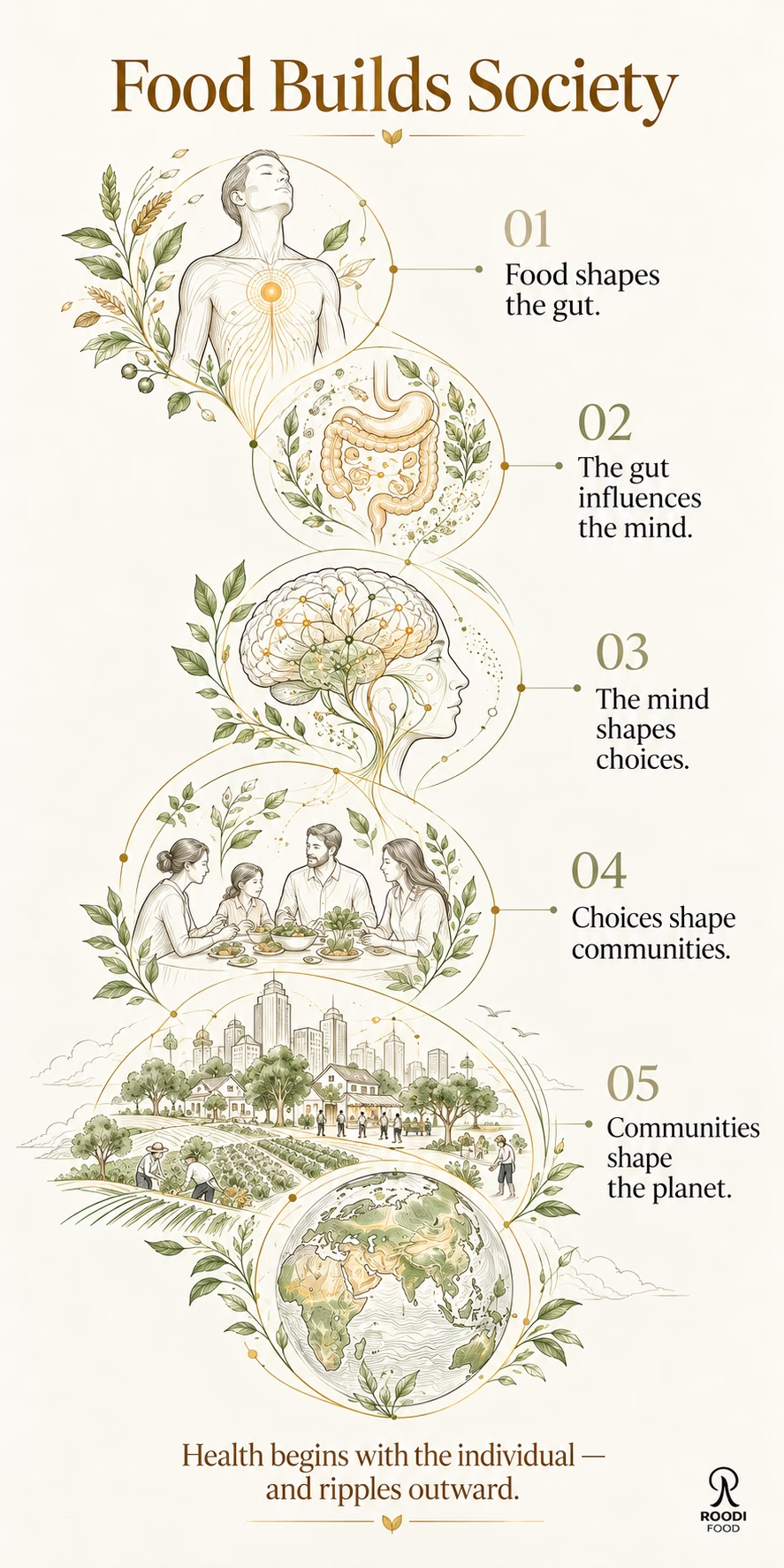
Why does this matter beyond health?
Because food does not affect only the individual.
Food affects people.
People form families.
Families form communities.
Communities form society.
Healthier people can contribute to healthier families and communities.
A healthier, more conscious human being may make different choices.
Different choices can shape relationships.
Relationships shape communities.
Communities shape society.
This is not a scientific conclusion.
It is our vision.
Our hope.
Our reason for doing this work.
We believe the Five Positive Millets are a great gift to humanity.
We believe Siridhanya Ambali is one way of strengthening one of the biological foundations of health.
And we believe that healthier people can help create a healthier society.
Not merely:
Better Health.
But:
Better Humanity
Better Society
Better Nature
Better Planet
And the idea that brings them together is very simple
FOOD BUILDS SOCIETY
And once again we thank Dr. Khadarvalli for giving knowledge and powerful tools that help achieve this.



Leave A Comment